
The Love We Give
“Love is the greatest force in the universe. It is the heartbeat of the moral cosmos. He who loves is a participant in the being of God.” — Martin Luther King Jr.
Photo credit: TJ Legler
August 22nd, 2026
📍House of Loto — Salida, Colorado, USA 🇺🇸
Greetings from the wilderness!
Several times over the past week, I’ve found myself in conversations at the waterfall about unconditional Love, connecting to a Truth that nearly every wisdom tradition points us toward—the kind of Love that asks us to see the sacred in ourselves, in one another, and in all of life. Whether through Yeshua, the Buddha, Rumi, Indigenous elders, or countless mystics throughout history, humanity has long been invited into the same essential practice: to Love.
As someone raised in the Christian tradition, I find that the teachings of Yeshua will always be my mother tongue*—yet in matters of the Spirit, I strive to be multilingual. So when I find myself reflecting on Love, it's often Yeshua's words that come to mind: "Love your neighbor as yourself."
*I've discovered that the Divine speaks through many languages. Learning to listen for Wisdom beyond the boundaries of my inherited tradition hasn't diminished my faith—it has expanded my worldview beyond religious constraints, my understanding of God, and my capacity to recognize Love wherever It is found.
I've heard those words my entire life. And I find it really easy to look at this as a message about loving others well and miss the implication that we need to love ourselves to love others well.
The uncomfortable truth is that many of us don’t actually love ourselves.
We carry guilt about things we’ve done. Shame about who we believe ourselves to be. Regret about choices we wish we could change. We focus on our shortcomings, our failures, the places where we think we should be further along by now. And underneath all of it is fear—Fear that we aren’t enough. If people really knew us, they wouldn’t stay. Fear that there is something fundamentally wrong with us that needs to be fixed before we can finally become worthy of Love.
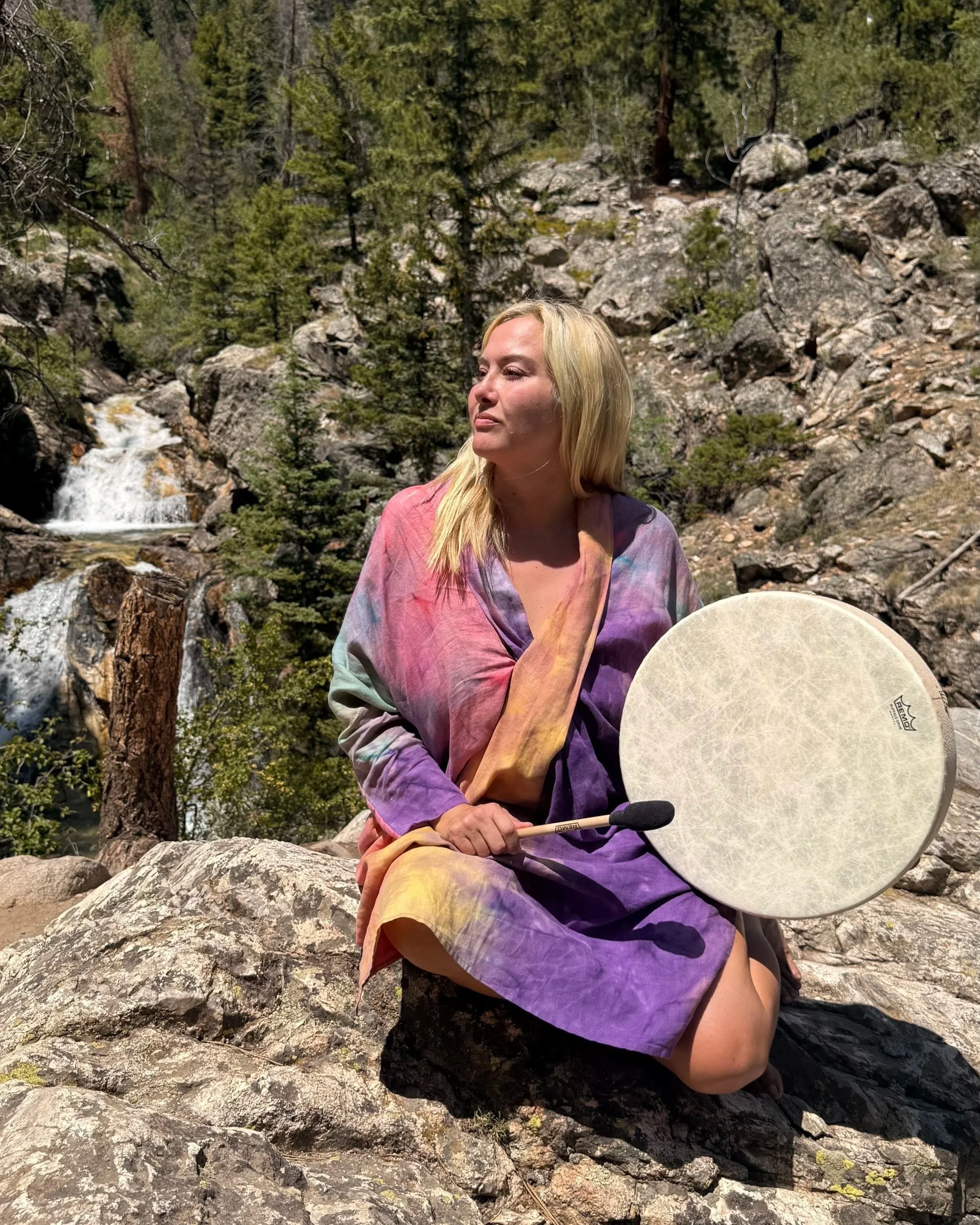
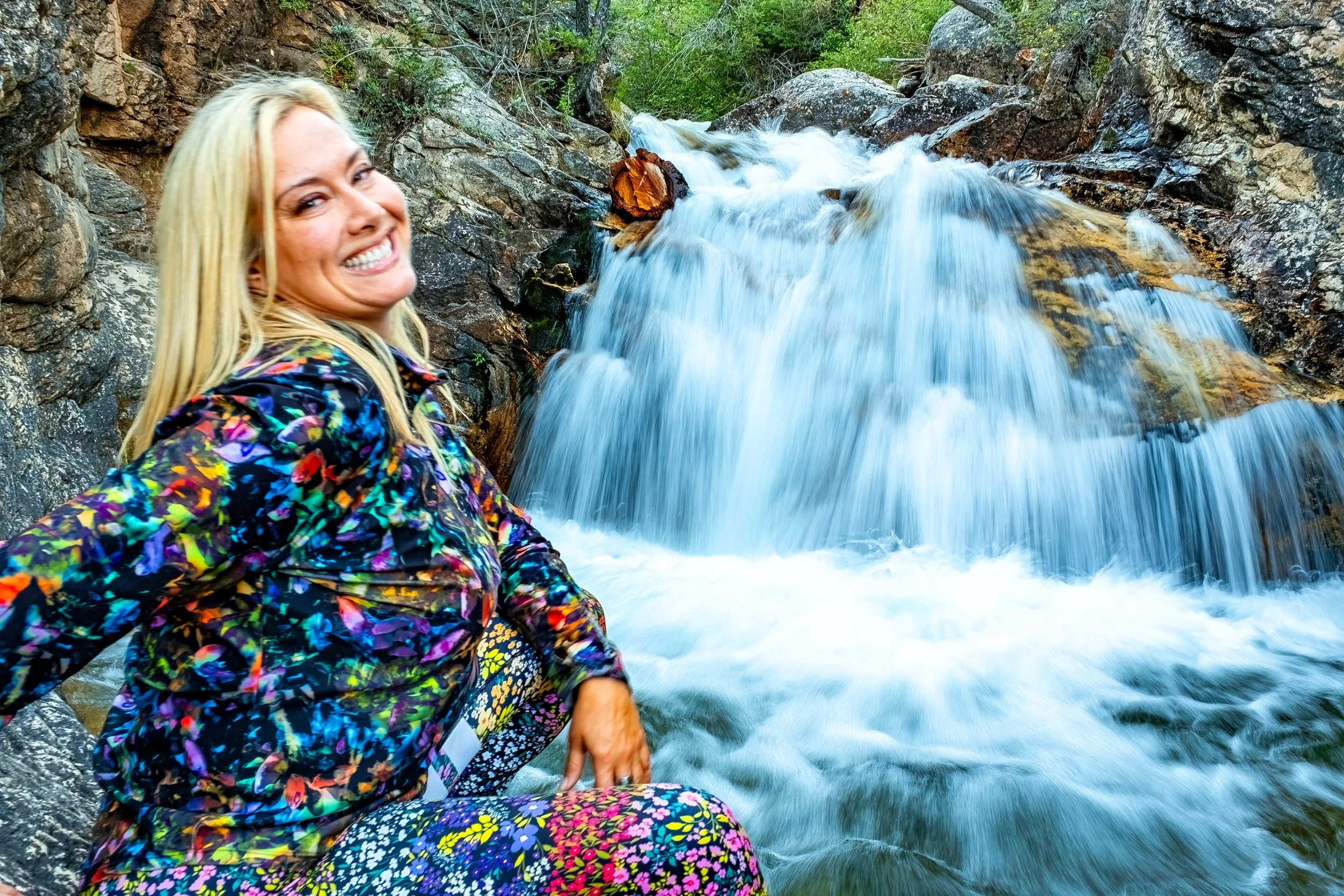
Praying at the waterfall during Forest Church
I think many of us have spent years believing some version of the same lie: I will be loved when...
When I get this right.
When I stop doing that.
When I become more successful.
More disciplined.
More spiritual.
More attractive.
More agreeable.
Less complicated.
Less needy.
Less angry.
Less me.
For many of us, conditional love was taught early—Sometimes explicitly, and sometimes without anyone ever saying the words: I will accept you if… I will approve of you when… You belong here as long as… And eventually, those external conditions become internal ones. We stop needing someone else to withhold Love from us because we learn to do it ourselves.
Which brings me back to Yeshua’s words. When asked which commandment mattered most, we are to love the Creator with every fiber of our being, and then: “Love your neighbor as yourself.”
I keep thinking about that relationship—Love of God, love of neighbor, love of Self. Don Miguel Ruiz describes it as a kind of “trinity of love,” arguing that we cannot really separate one from the others.
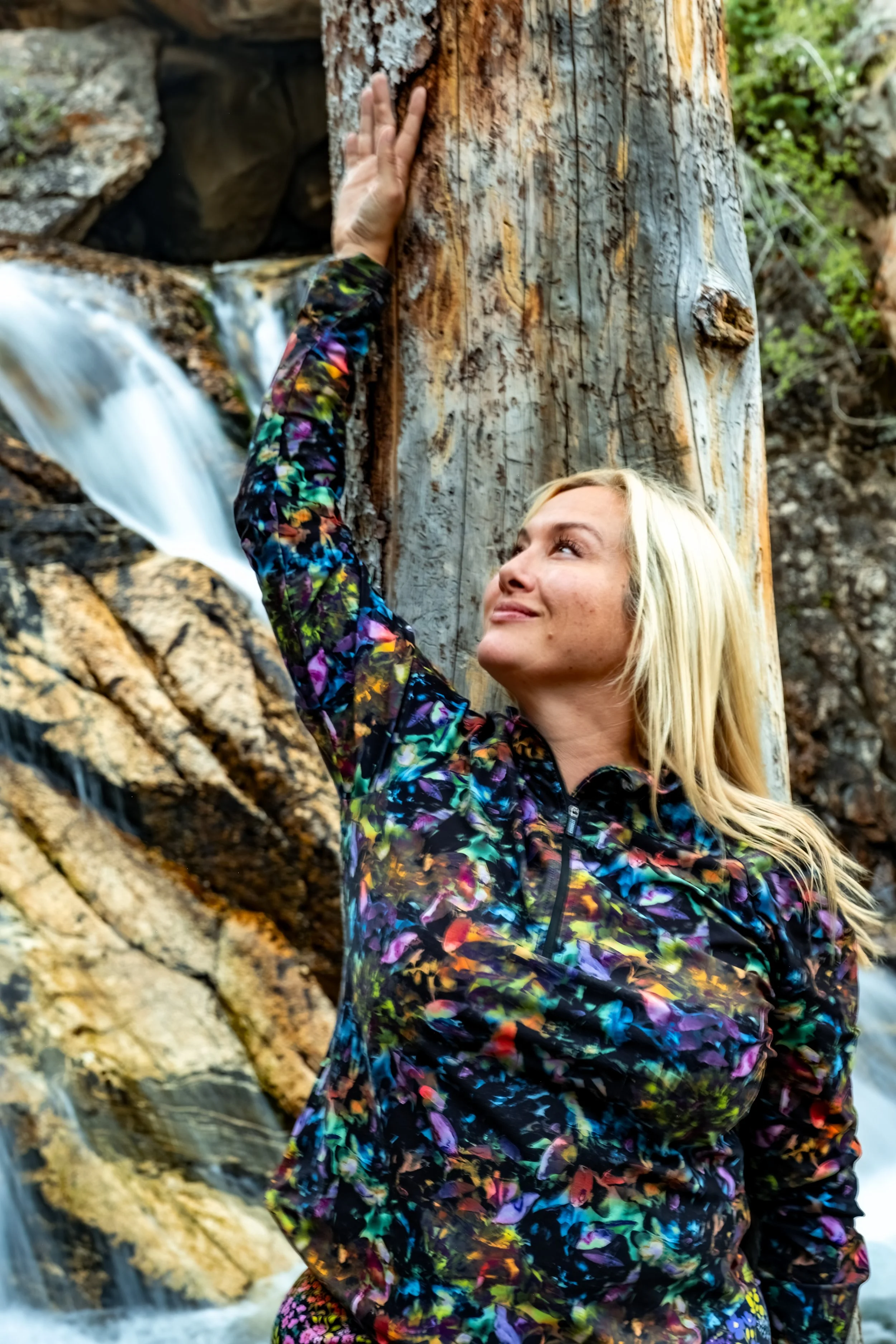
Photo Credit: TJ Legler
And that raises a challenging question for me: If I love myself conditionally, how can I expect myself to be able to love anyone else unconditionally?
If I withhold compassion from myself when I fail, I will probably struggle to extend compassion when someone else fails.
If I require perfection from myself, I will eventually require some version of it from others.
If I believe I must earn belonging, I may start deciding who else has earned theirs.
If I distrust myself, I may become suspicious of anyone whose experience of the world differs from mine.
If I believe parts of myself are unacceptable, I may have a hard time accepting those same parts when I encounter them in another human being.
Mi’kmaq activist Matt LeBlanc names this tension beautifully: “How can I love my neighbor as myself when my theology has taught me to hate myself?” I would phrase it slightly differently for my own story: How can I love my neighbor as myself when my culture and inherited theology have taught me not to trust myself?
That question hits close to home as someone raised in religious boxes. I’m grateful for much of what the Christian tradition gave me, and I am also learning to examine the effects of empire and colonization within it. There are ideas I inherited about myself that I no longer believe reflect the true nature of the I AM. Ideas that taught me to distrust my body, my intuition, and desire itself.
To believe my heart was primarily dangerous rather than a place where Divine Wisdom might also be encountered. To focus so much on what was “wrong” with humanity that it became difficult to recognize what was sacred within us.
And when a dogmatic structure convinces us that we are fundamentally unworthy of Love as a means of fear-based control, we shouldn’t be surprised when we spend our lives trying to earn it.
I’ve come to know that our ability to love others begins with receiving Love. Julian of Norwich came to a remarkably similar understanding centuries ago. After years of contemplating her mystical visions, she wrote that their meaning was ultimately simple: “Love was God’s meaning.” She understood that before we were ever conceived in flesh/matter, we were loved. Perhaps the work of being human isn’t becoming worthy of Love, but learning to accept the fact that we already are.
That may sound simple. I don’t think it is. For many of us, receiving Unconditional Love asks us to surrender the entire system by which we have learned to measure our worth:
Achievement.
Approval.
Productivity.
Appearance.
Correctness.
Usefulness.
Even spiritual goodness.
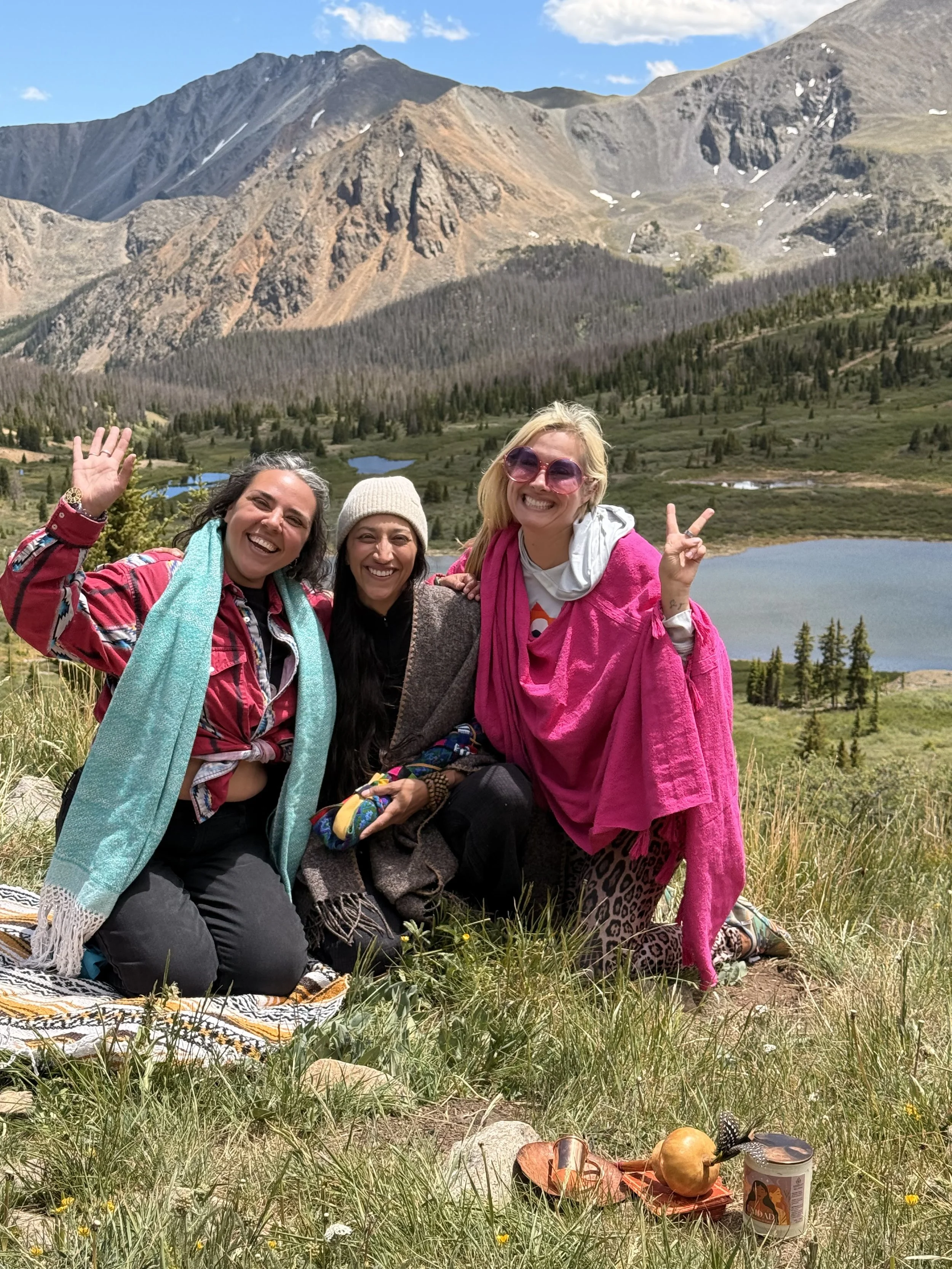
Mothers Ara, Ileana, and Jennifer
And without those measurements, the ego gets nervous. But how will I know I’m good enough? Maybe Love answers: You were never being graded.
This is where I’m beginning to understand self-love differently. I don’t mean endless affirmation or pretending we don’t have growing to do. Love can tell the truth, hold boundaries, recognize harm, take responsibility, apologize, and change.
But Love does not require shame in order to transform us. In fact, I’m increasingly convinced that shame often keeps us stuck in the very patterns we’re trying to escape. Meggan Watterson writes in The Girl Who Baptized Herself: “The love that liberates changes us rather than asks what it loves to change.” That distinction matters.
Conditional love says: Change, and then I’ll love you.
Liberating Love says: You are loved. And because you are loved, transformation becomes possible.
Those are radically different ways of moving through the world. And if we learn the second way within ourselves, I think it begins changing how we encounter everyone else. We stop approaching people primarily as problems to solve, and we become less interested in forcing agreement. Less threatened by differences. Less invested in making everyone conform to our understanding of what is right, normal, faithful, successful, or acceptable.
Richard Rohr writes in The Universal Christ: “To move beyond our small-minded uniformity, we have to extend ourselves outward.” I’m learning the difference between unity and conformity.
Conformity says: We can belong together when you become more like me.
Unity says: We belong to one another even in our differences.
That distinction has become increasingly important to me as I continue examining some of the colonial assumptions embedded in the religious and cultural worldview I inherited. Who taught me what was normal? Who taught me what was holy? Whose voices were centered? Whose wisdom was dismissed? Who was expected to assimilate before they were welcomed? And where have I unconsciously asked others to meet conditions for belonging that I first learned to place upon myself?
These are not comfortable questions. But I think Love is capable of holding uncomfortable questions.
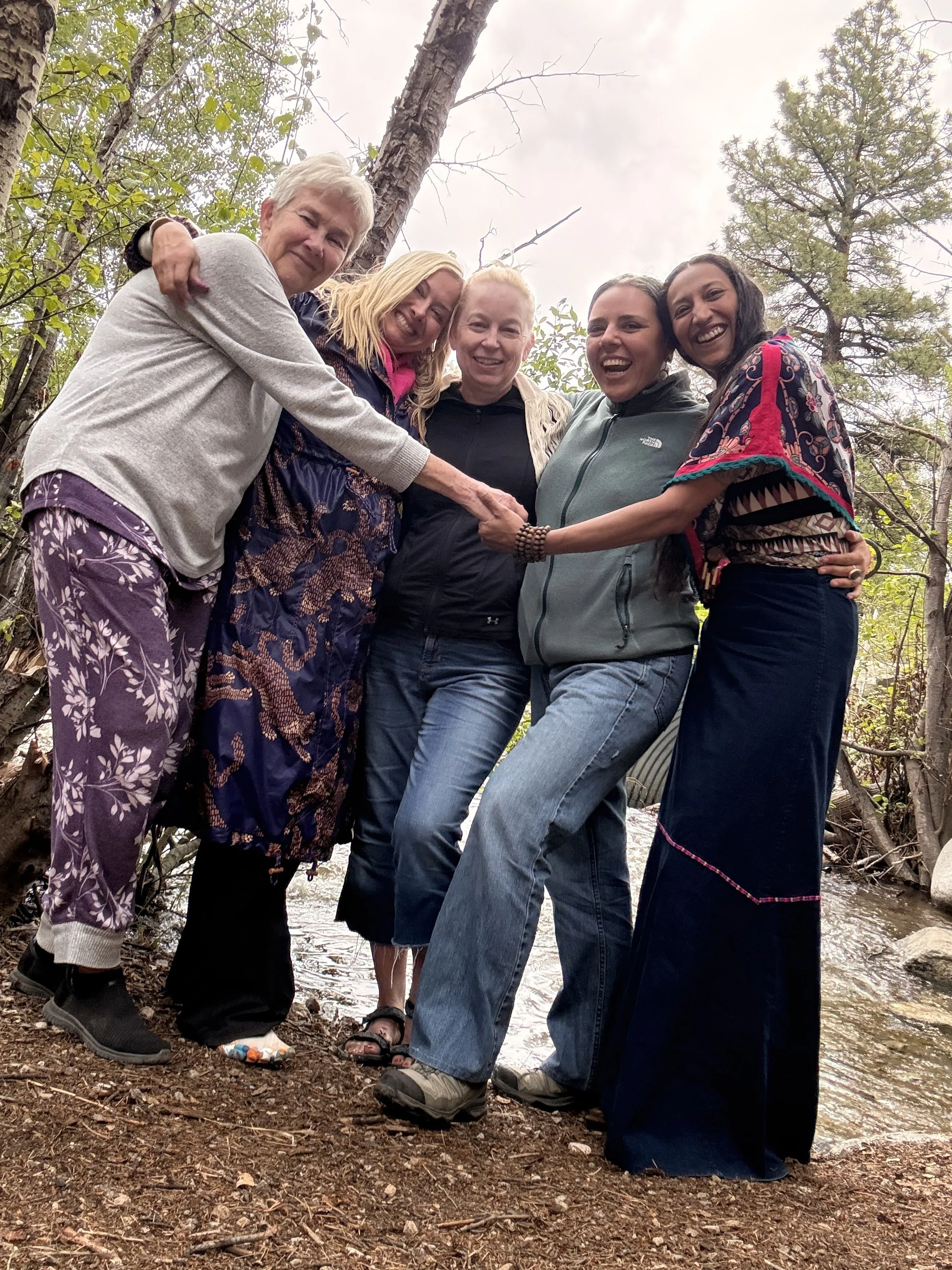
Celebrating our differences
In the New Testament, Paul seems to wrestle with something similar in Romans 14. The early Christian community was disagreeing about food, religious observance, and matters of conscience. Paul didn’t resolve the tension by demanding that everyone adopt the same beliefs. Instead, he told them to stop judging one another. To make room for difference. That feels remarkably relevant today.
We live in a dualistic world, increasingly trained to believe that it is our job to sort people. Right/wrong. Good/bad. Us/them. Worthy/unworthy. In/out. No wonder we are so polarized in the US. I’m beginning to understand that a mature spirituality should make us more capable of Love, not more skilled at division, polarization, and exclusion.
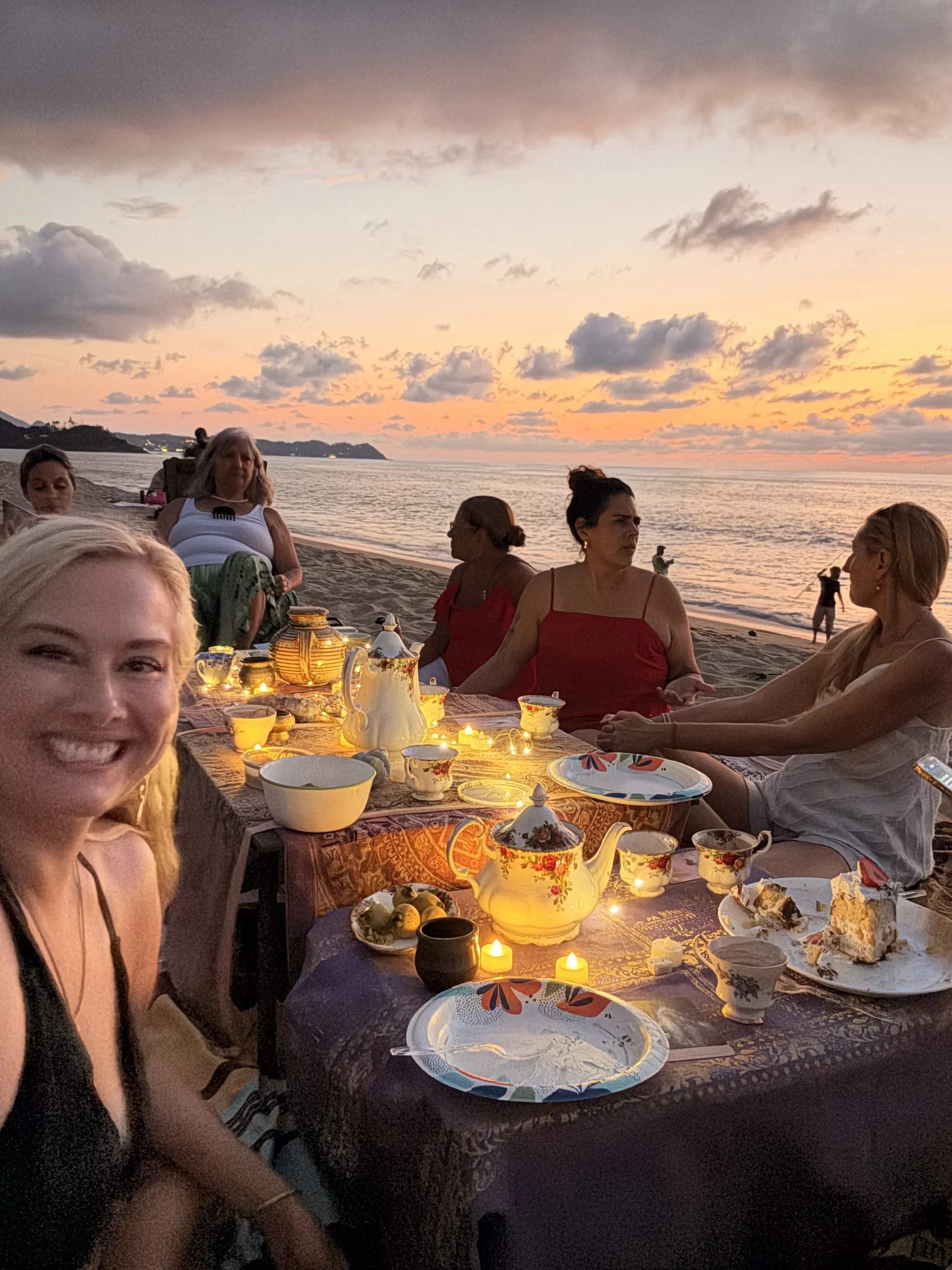
San Pancho full moon tea party, 2026
Don José Ruiz writes in My Good Friend the Rattlesnake that when our beliefs about ourselves are saturated with love, we can grow into our full potential rather than imprisoning ourselves with our own limitations—and then extend that love outward.
Maybe that is part of what Yeshua understood when he said: Love your neighbor as yourself. The way we treat ourselves is not separate from the way we participate in the world. The relationship I cultivate within myself becomes practice for every other relationship I enter. And practice matters.
Paulo Coelho writes: “What makes someone a great artist, a great writer or a great musician? Practice.” In his book, Supreme Gift, he goes on to say that love is the same. We practice it—In the way we speak to ourselves when we make a mistake. Whether we let ourselves rest without earning it. Forgiving the person we used to be for not knowing what we know now.
And then we practice it with the people around us. Especially the people who are different. The people whose experiences challenge our assumptions, and whose beliefs don’t resemble ours. The people we don’t understand…yet.
Maybe loving our neighbors well begins by ending the conditions we have placed upon Love within ourselves. Because if I am constantly trying to earn my own acceptance, I will probably keep expecting everyone else to earn theirs too. But if I begin to believe that I am beloved, then perhaps I can begin offering others the same freedom.
With Love, unconditionally—
Jennifer
P.S.—In a blog post about Unconditional Love, I feel it is worth highlighting how this primordial force is shared across the World’s Great Religions:
Christianity: “Beloved, let us love one another, for love is of God; and everyone that loveth is born of God, and knoweth God. He that loveth not, knoweth not God, for God is Love.”
Confucianism: “To love all men is the greatest benevolence.”
Buddhism: “Let a man cultivate towards the whole world a heart of Love.”
Hinduism: “One can best worship the Lord through Love.”
Islam: “Love is this, that thou shouldst account thyself very little and God very great.”
Taoism: “Heaven arms with Love those it would not see destroyed.”
Sikhism: “God will regenerate those in whose hearts there is Love.”
Judaism: “Thou shalt Love the Lord thy God with all thy heart and thy neighbor as thyself.”
Jainism: “The days are of most profit to him who acts in Love.”
Zoroastrianism: “Man is the beloved of the Lord and should Love him in return.”
Baha’i: “Love Me that I may love thee. If thou lovest Me not, My love can no wise reach thee.”
Shinto: “Love is the representative of the Lord.”
Disclosure: This post may contain affiliate links. If you click through a link and make a purchase, it may earn me a small commission, at no additional cost to you! See our disclaimer for details.
Keep Reading…

Dig Deeper…

While death reveals attachment and asks us to let go, the shadow shows us why we can't…