
Light & Dark: Moving Beyond Dualistic Thinking
“But just as the hour-hand of the watch goes up to twelve and down to six, so, too, there is day and night, waking and sleeping, living and dying, summer and winter. You can’t have any one of these without the other, because you wouldn’t be able to know what black is unless you had seen it side-by-side with white, or white unless side-by-side with black.” — Alan Watts
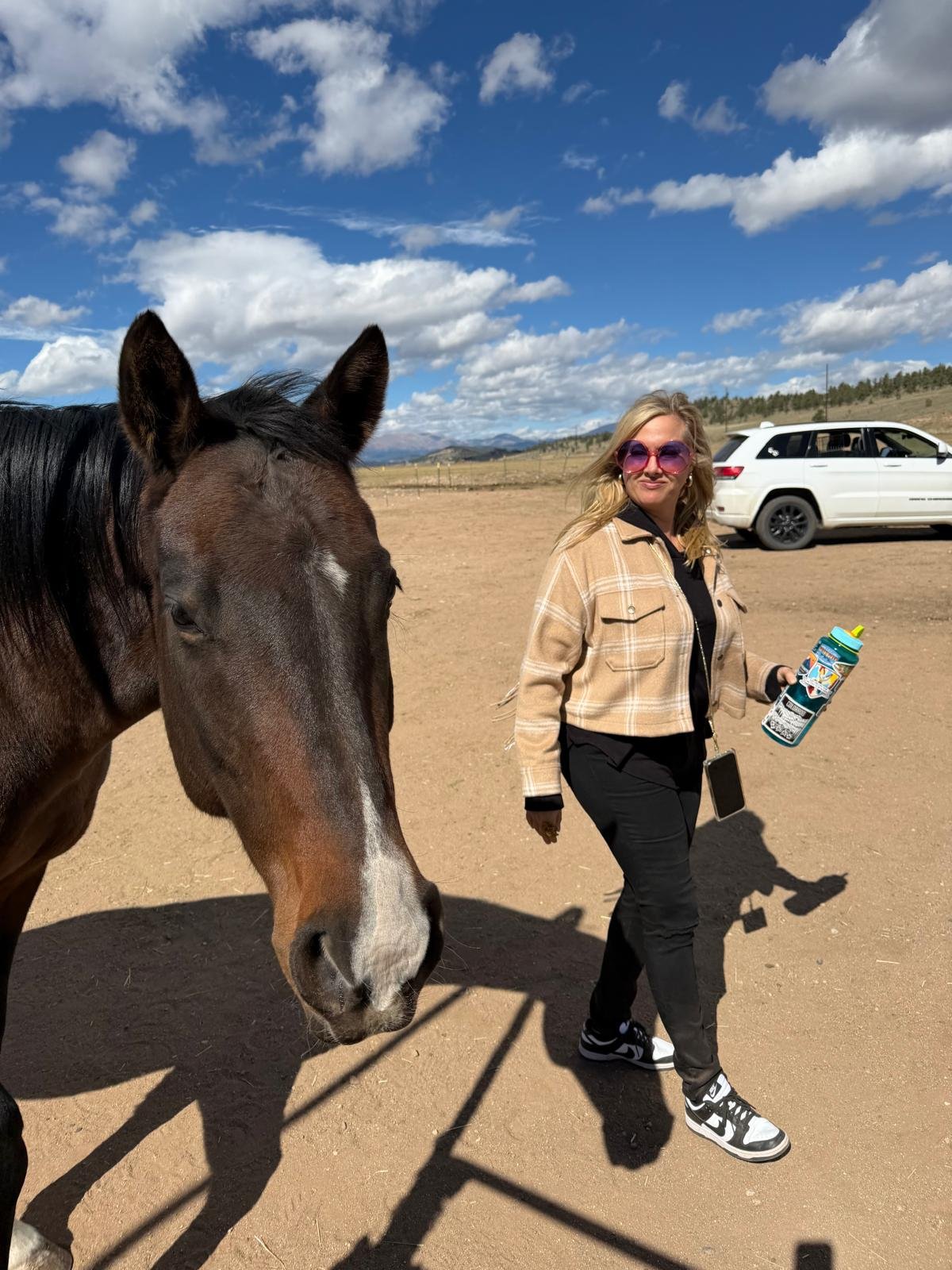
My new friend, Sen, at the Middle Path stables where I attended an equine therapy women’s retreat yesterday
October 12th, 2026
📍House of Loto—Salida, Colorado, USA 🇺🇸
Greetings from the wilderness!
For much of my life, I understood the spiritual battle between light and darkness as a struggle between opposing forces—good and evil, right and wrong. But what if the opposites we've used to define our reality aren't as separate as we've believed?
In 2021, following a season of profound burnout, I had an ecstatic experience that fundamentally changed my understanding of God, Love, and who I am.
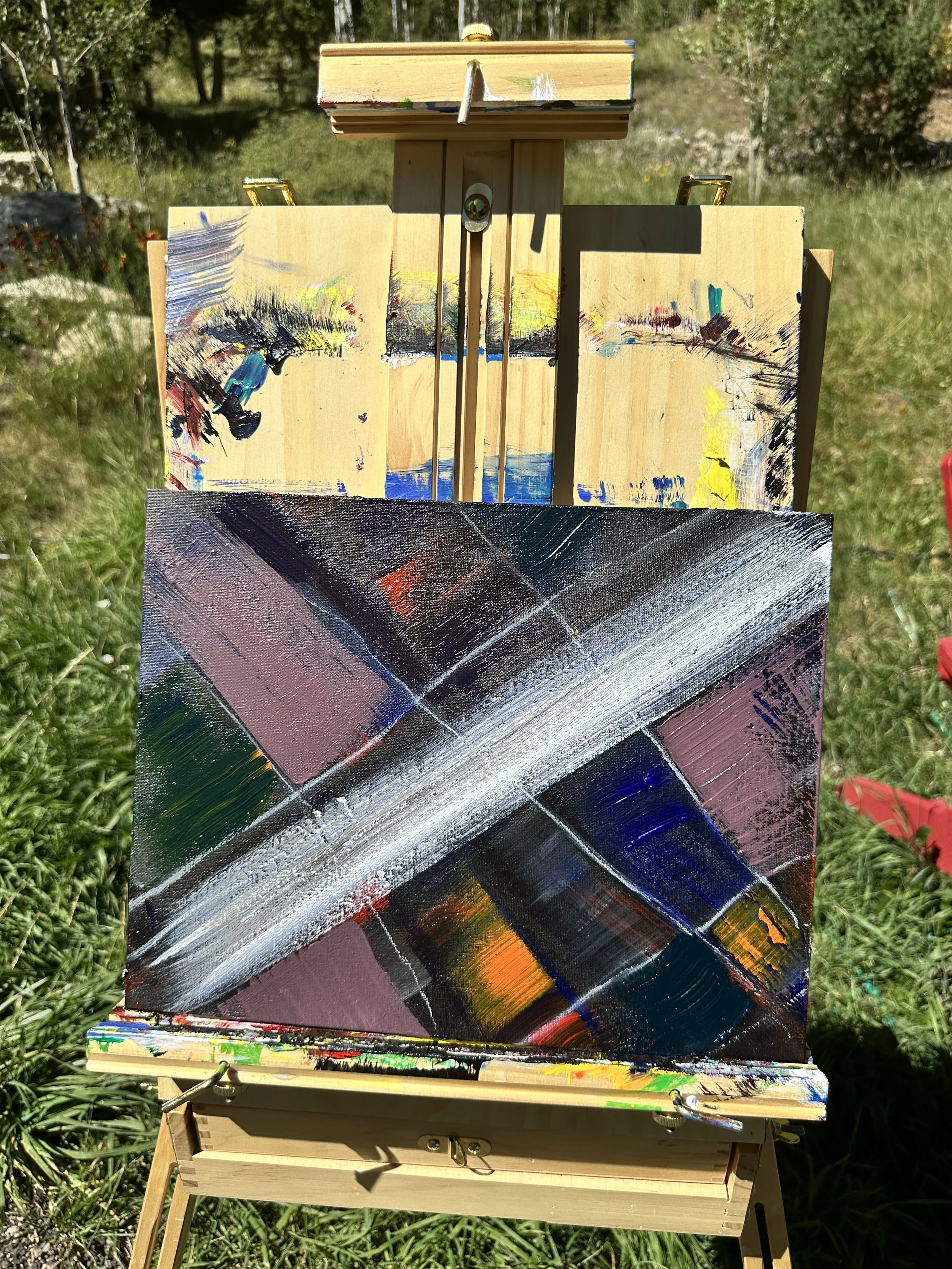
Cutting the Cord of Fear, 2024
I haven't shared the full story publicly yet. It's an experience I've spent the past five years integrating through contemplation, the study of mysticism, subsequent visions, creative expression, and my travels. One of the insights that emerged through these experiences was that the opposite of Love is not hate, but fear.
And in 2024, while painting naked in the forest, another vision challenged how I understood the relationship between light and darkness. I found myself asking Great Spirit a question: Why allow darkness to exist at all? The Wisdom I received was surprisingly simple: Without darkness, we would have no context for Light.
At first, this seemed like an answer about contrast. We recognize warmth because we've experienced cold. We understand stillness because we've known movement. And we recognize the brilliance of light, in part, because we've experienced darkness.
But as I continued contemplating this revelation over the years since, I began to recognize something deeper. I thought darkness needed to be defeated to experience the Light. But what if the Light was never absent?
I've spent much of my life interpreting the world through dualities. These distinctions can help us navigate the world, but they can also become limitations when we begin to see everything as either/or. Yes, but…
The ancient Tao Te Ching explores this relationship between apparent opposites: “When people see beauty as beautiful, they recognize other things as ugly.”
It goes on to describe how long and short, difficult and easy, high and low define one another. Each becomes recognizable in relationship to the other.
This is the wisdom reflected in yin and yang: two distinct yet interwoven expressions of a larger whole. And it's helped me understand the difference between duality and dualistic thinking.

Iceland’s black sands beach
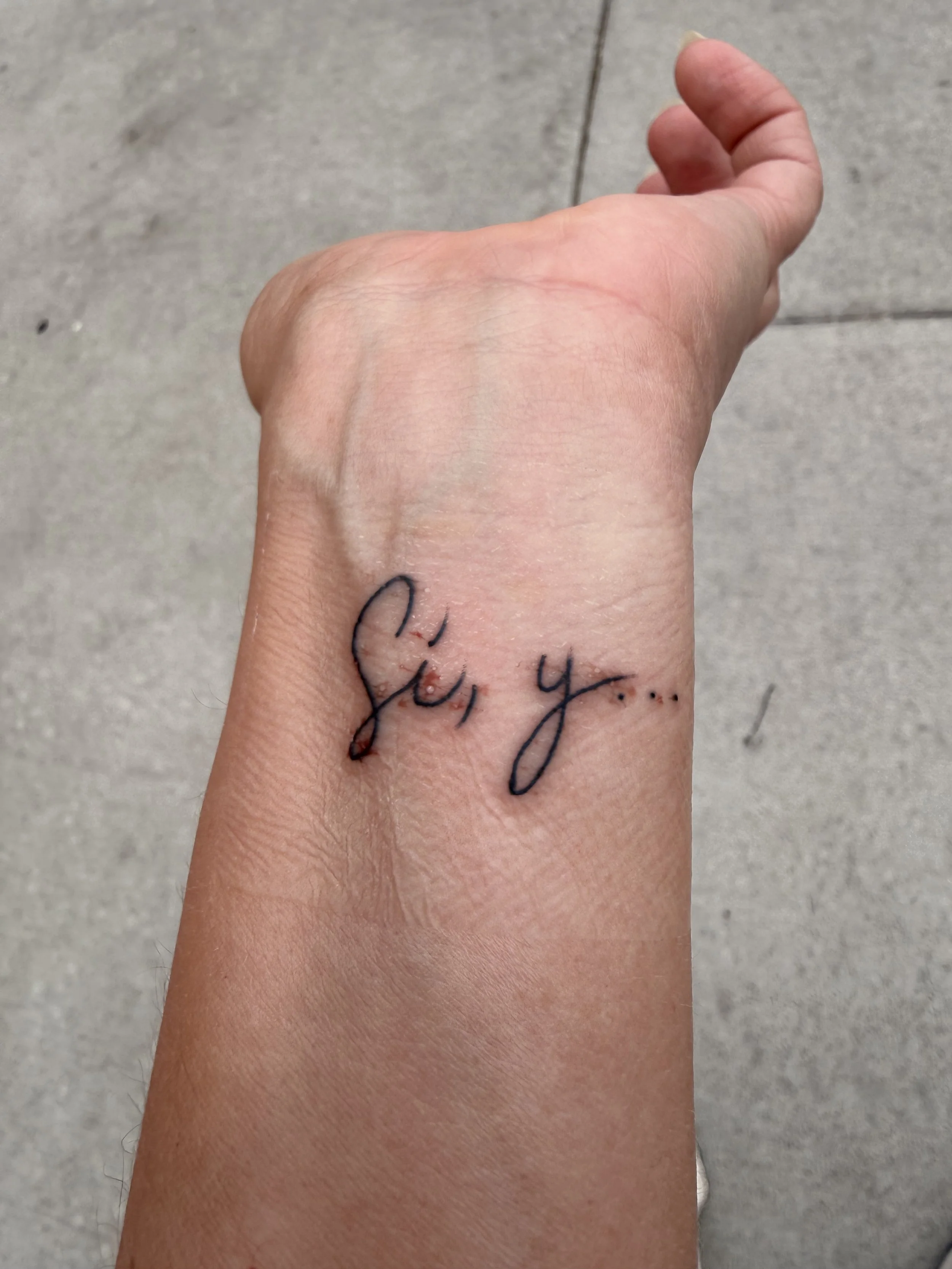
My divorce tattoo is about the paradoxical nature of Life—something can be good, and it can still be time for it to end. Yes, and…
Duality allows us to recognize differences. Dualistic thinking convinces us those differences must mean separation.
Paradox invites us to consider that two seemingly contradictory things can both be true. We can experience grief and gratitude. Strength and vulnerability. Fear and courage. One does not necessarily cancel out the other. Yes, and…
And nondualism invites us to recognize an underlying wholeness that holds these differences without erasing them.
For me, that wholeness is Unconditional Love. Not simply an emotion or something we offer one another, but the very nature of the Divine—the sacred reality in which all of Creation exists. Returning to Oneness, then, is returning to Love. Not because we were ever truly separate from it, but because we've forgotten how to recognize our belonging, our birthright.
Shadow work in the clover field
Imagine standing outside in the sunlight. You feel its warmth against your skin, even as your body casts a shadow across the earth. Turn your back to the sun, and your shadow stretches before you.
You can be standing in the Light and still cast a shadow. The shadow is real, but it isn't the whole picture. And its presence doesn't mean the Light has disappeared.
I'm learning that the spiritual battle I'd imagined for so much of my life is less about defeating darkness and more about where I direct my attention. Turning toward the Light doesn't make the shadow disappear—It changes what I can see.
Of course, not all darkness is the same. The natural darkness of night is not the same as cruelty or injustice…
…and turning toward Love doesn't mean denying fear, ignoring suffering, or abandoning discernment. It changes how we respond to what we see—not from fear alone, but with greater awareness, compassion, and courage.
In the Christian Scriptures, we read: "God is love, and all who live in love live in God, and God lives in them." — 1 John 4:16 (NLT)

This is the understanding of God that has been unfolding within me since 2021. Not Love as something we must earn or make ourselves worthy of receiving, but Love as the very nature of the Divine.
And if God is Love, and God is present in all Creation, perhaps the question isn't whether Love has disappeared when fear or darkness enters our experience. Perhaps it's whether we can recognize Love's presence even when we cannot see it clearly.
I still experience fear. I still encounter darkness, within myself and in the world. My ecstatic experiences of the Divine haven't made me immune to the challenges of being human. But they have changed what I believe is possible.
I no longer believe I must defeat every shadow to live in the Light, because the Light of Love was here all along. Love has never left me, because Love is in me. I am in Love. Love is in all of us and everything. Love IS.
With Love, unconditionally—
Jennifer
A question for reflection
Where in your life have you been so focused on the shadows that you've forgotten the Light? What might change if you remembered that Love was present all along?
Disclosure: This post may contain affiliate links. If you click through a link and make a purchase, it may earn me a small commission, at no additional cost to you! See our disclaimer for details.
Keep Reading…
Dig Deeper…
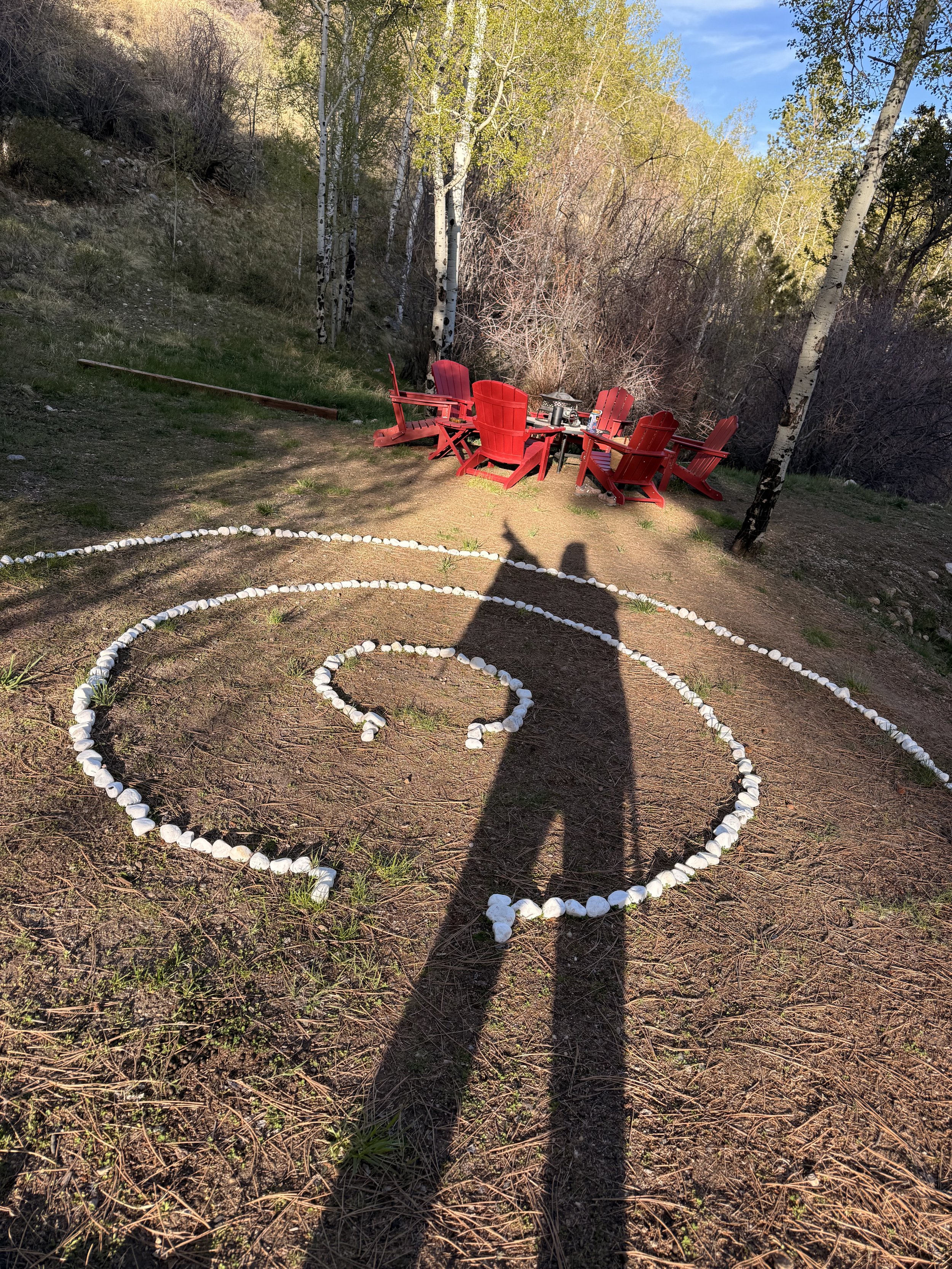

This is the wisdom reflected in yin and yang: two distinct yet interwoven expressions of a larger whole. And it's helped me understand the difference between duality and dualistic thinking.
Duality allows us to recognize differences. Dualistic thinking convinces us those differences must mean separation.