
Shadow Work: Learning to See What We’ve Hidden
There are parts of ourselves we know well. The parts we readily claim. The qualities we are proud to name. The stories that fit comfortably within our understanding of who we are.
And then there are the parts we have learned not to see. The anger we were told was inappropriate. The tenderness that made us feel vulnerable. The desire that brought shame. The confidence someone called arrogance. The grief we learned to swallow. The creativity that felt impractical. The sexuality that made others uncomfortable. The need we were taught was too much.
We don't necessarily stop having these parts of ourselves. We simply stop identifying with them. Depth psychology calls this territory the shadow.
And shadow work is the practice of turning toward what we have hidden, rejected, suppressed, or disowned—not so that we can become better versions of ourselves, but so that we can become more whole.
“Shadow work is not about becoming someone better. It is about becoming more integrated and less divided.”

What Is the Shadow?

The concept of the shadow is most closely associated with Swiss psychiatrist Carl Jung, who used the term to describe aspects of the personality that remain outside our conscious awareness.
We often think of the shadow as our "dark side": anger, jealousy, selfishness, greed, lust, aggression. Those things can certainly live there. But the shadow isn't synonymous with darkness or evil. The shadow contains whatever we have learned cannot belong.
Depending on our families, cultures, religions, relationships, and experiences, completely different qualities may be pushed outside the boundaries of the person we believe we are allowed to be:
Someone taught that anger is dangerous may exile their anger. Someone praised for being endlessly helpful may struggle to acknowledge their own needs. Those taught humility in a way that required self-erasure may hide their power. Someone who was punished for emotional expression may disconnect from tenderness.
Many of us were taught to distrust the body, so we may have learned to suppress pleasure and desire. Even being rewarded for achievement may find us resisting play, rest, and uncertainty. Even beautiful parts of ourselves can become shadow—Creativity, sensuality, leadership, joy, wildness, confidence, and spiritual curiosity. Our shadow may contain some of the very qualities we most need in order to become whole.

How Does the Shadow Form?
Most of us learn very early what receives belonging and what threatens it. We notice what earns praise, what creates tension, and which emotions adults can tolerate and which ones make them uncomfortable.
We notice what our families, communities, religious traditions, cultures, and relationships call acceptable. And because belonging is one of our most fundamental human needs, we adapt.
Some of those adaptations are necessary and healthy. Human beings have to learn how to live in relationship with one another. But sometimes adaptation becomes self-rejection.
A child who repeatedly hears, explicitly or implicitly, Don't be so sensitive may eventually learn: I am not sensitive.
A girl praised for being agreeable may learn: I am not angry.
Someone taught that questioning spiritual authority is dangerous may learn: I am not skeptical.
A person whose confidence makes others uncomfortable may learn: I don't want attention.
But the rejected quality doesn't disappear simply because it no longer fits our conscious identity. It goes underground. And from there, it can continue influencing our relationships, choices, reactions, and perceptions without our awareness. This is one reason shadow work matters.
What we cannot see in ourselves can still shape our lives.

The Shadow Often Appears in Relationship
We don't usually discover our shadow while calmly thinking about ourselves. We bump into it:
Someone irritates us, intimidates us, disappoints us, makes us jealous, or behaves in a way we simply cannot understand.
Our reaction may be entirely appropriate. Shadow work does not mean assuming every boundary, disagreement, or judgment is secretly about us. Sometimes harmful behavior is harmful behavior. Sometimes someone really is being an asshole. But sometimes the intensity of our reaction contains information.
This is where projection becomes useful. Projection happens when something we have difficulty recognizing in ourselves is experienced primarily as belonging to someone else. We may be infuriated by someone's need for attention while remaining unaware of our own desire to be seen.
We may judge someone's confidence because we have not permitted ourselves to inhabit our own power. Or resent someone's ability to rest because our identity has become attached to productivity.
And shadow projection isn't always negative. Sometimes the people we admire most are carrying qualities we have not yet recognized in ourselves. Their courage, freedom, creativity, sensuality, or willingness to take up space. The shadow can appear through envy as easily as irritation.
That makes relationship one of our most powerful mirrors.
How to Recognize the Shadow
Shadow work begins less with answers than with curiosity. Instead of immediately asking, How do I fix this?, we begin noticing.
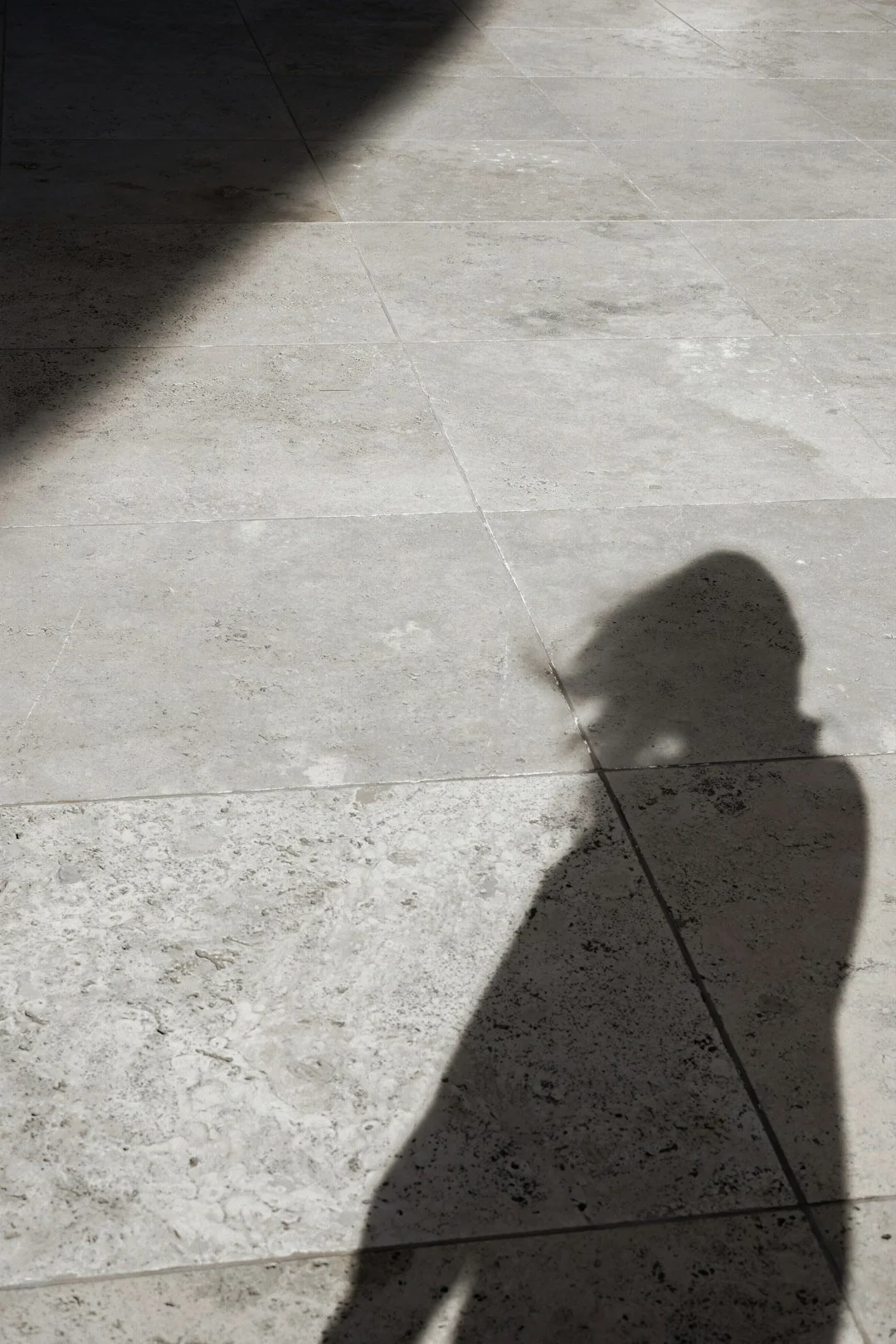
Pay attention to disproportionate reactions.
When an emotional response feels much larger than the present situation, pause. What exactly was activated? What does this remind me of? What story did I immediately begin telling myself?
Notice recurring judgments.
Think about the qualities you consistently criticize in other people:
Too loud.
Too needy.
Too emotional.
Too ambitious.
Too selfish.
Too sexual.
Too confident.
Too spiritual.
Too much.
Judgment doesn't automatically mean projection. But repeated, emotionally charged judgment can be worth examining.
Ask yourself: What would it mean if I allowed myself to possess some version of this quality?
“When you become more aware, the thoughts and beliefs in your unconscious mind can be brought to your consciousness. This can allow you to break free of old patterns like nothing else can. This deepening awareness can therefore result in changes in your behavior, which may be noticed by others before they are noticed by you.”

Get curious about envy.
Envy can be uncomfortable to admit, which makes it particularly revealing. Instead of shaming yourself for it, ask what the envy might be pointing toward. What does this person seem to permit themselves that I don't?
Freedom?
Visibility?
Success?
Pleasure?
Rest?
Creativity?
Belonging?
Maybe envy isn't only telling us what someone else has. Sometimes it reveals what wants permission within us.

Look for recurring patterns.
The shadow often announces itself through repetition.
Different relationship. Same conflict.
Different workplace. Same resentment.
Different community. Same feeling of exclusion.
Different opportunity. Same urge to disappear.
When something keeps happening, the question doesn't have to be: Why does this always happen to me? We can also ask: What is this pattern inviting me to see?

Listen to the body.
Sometimes the body recognizes the shadow before the mind does. A tightening chest. Heat rising into the face. A clenched jaw. The impulse to defend yourself. The sudden desire to leave. A collapse inward.
These responses aren't proof of what something means. They are invitations to pay attention. Rather than immediately overriding the sensation, we can become curious: What is my body protecting right now?
Practicing Shadow Work
Shadow work doesn't require digging relentlessly through our psyche looking for hidden wounds. In fact, turning healing into another form of self-surveillance rather defeats the purpose.
We can practice slowly. When something activates us, we can pause before immediately assigning blame or meaning. We can journal. We can notice sensations in the body. We can work with dreams.
We can explore recurring patterns with a therapist or trusted practitioner. We can use creative practices that allow material to emerge without requiring us to explain it immediately. We can sit across from our own reflection and notice what happens when we truly look.
Mirror work can be particularly revealing because there is nowhere else to direct our attention. We encounter ourselves—not the curated image, not the role we perform, but the person looking back.
And we can practice shadow work in relationship. This is one reason we care so deeply about creating intentional relational spaces at Loto. Other people inevitably reveal us to ourselves. Not because everyone else's perception of us is true. But because relationship gives us somewhere to notice ourselves.
“What shifts the weight of our baggage is simply choosing it. Owning the baggage as the particular story our soul needed to live out allows us to claim it. And oddly enough, claiming it allows us to then let it go. Once we let go of some of the stories that have been defining and confining us, we can align our identity with a deeper truth—with the soul-story beneath the surface drama of who we are according to the ego...We can claim the power to become the author of our own narrative.”

Integration, Not Elimination
Perhaps the greatest misunderstanding about shadow work is that once we identify the shadow, we are supposed to get rid of it. But integration is not elimination.
If we discover anger in the shadow, the invitation isn't to become an angry person. It may be to recognize that anger contains information about boundaries, injustice, desire, or self-protection.
If we discover selfishness, perhaps we are being invited to acknowledge needs we have habitually abandoned. If we discover a desire for attention, perhaps some part of us simply longs to be witnessed.
If we discover power, perhaps we are learning that humility never required making ourselves small.
Integration asks:
What does this part of me know?
What has it been protecting?
What might it become when it no longer has to remain hidden?
We don't hand the shadow the steering wheel. We give it a seat at the table.
Becoming More Integrated, Less Divided
There is a temptation in personal and spiritual development to imagine healing as a gradual purification of the Self. We become more conscious, loving, regulated, enlightened. And eventually, perhaps, we finally eliminate all those inconvenient parts of ourselves.
Shadow work offers a different invitation. Wholeness does not require becoming only light. It asks us to become capable of holding more of what is true. Not every impulse needs to be acted upon. Not every story needs to be believed. Not everything we discover within ourselves represents who we ultimately are.
We do not have to fix, reject, or even fully understand everything we find. But we can learn to look.
Disclosure: This post may contain affiliate links. If you click through a link and make a purchase, it will earn me a small commission, at no additional cost to you! See our disclaimer for details.
Dig Deeper…


You May Also Like…



While death reveals attachment and asks us to let go, the shadow shows us why we can't…