
Mirror Work: Learning to See Your Self

There is a difference between looking at yourself and seeing yourself. Most of us look at ourselves in mirrors every day. We check our hair. Notice the lines around our eyes. Examine the body we have been taught to evaluate. We make adjustments before presenting ourselves to the world.
But how often do we actually look into our own eyes? How often do we stay there long enough to notice what happens?
For many of us, being truly seen—even by ourselves—can feel surprisingly uncomfortable.
We see this at nearly every Loto retreat. We often open our circles with mirror work, inviting each person to simply look into their own eyes. Almost immediately, you can see the discomfort. We notice our appearance. We become self-conscious. We laugh nervously. We look away. The inner critic gets loud.
Anything, sometimes, except simply seeing the person looking back at us.
“Just as water mirrors your face, so your face mirrors your heart.”
In her exploration of the shadow and inner child, Jennifer’s letters have spoken about the parts of ourselves that can become hidden, rejected, or abandoned. We learn early which expressions of ourselves receive love and belonging and which ones create discomfort, criticism, rejection, or shame.
So we adapt. We learn to be good. Helpful. Successful. Independent. Quiet. Strong. Spiritual. Easy to love.
These adaptations aren't necessarily bad. Many of them helped us belong, protected us, and allowed us to navigate the families, communities, cultures, and religious traditions in which we were formed. Eventually, though, those adaptations can become so familiar that it becomes difficult to distinguish between who we learned to be and who we are.
Mirror work offers a surprisingly simple place to begin to see the difference.
The Inner Child Is Not the Self
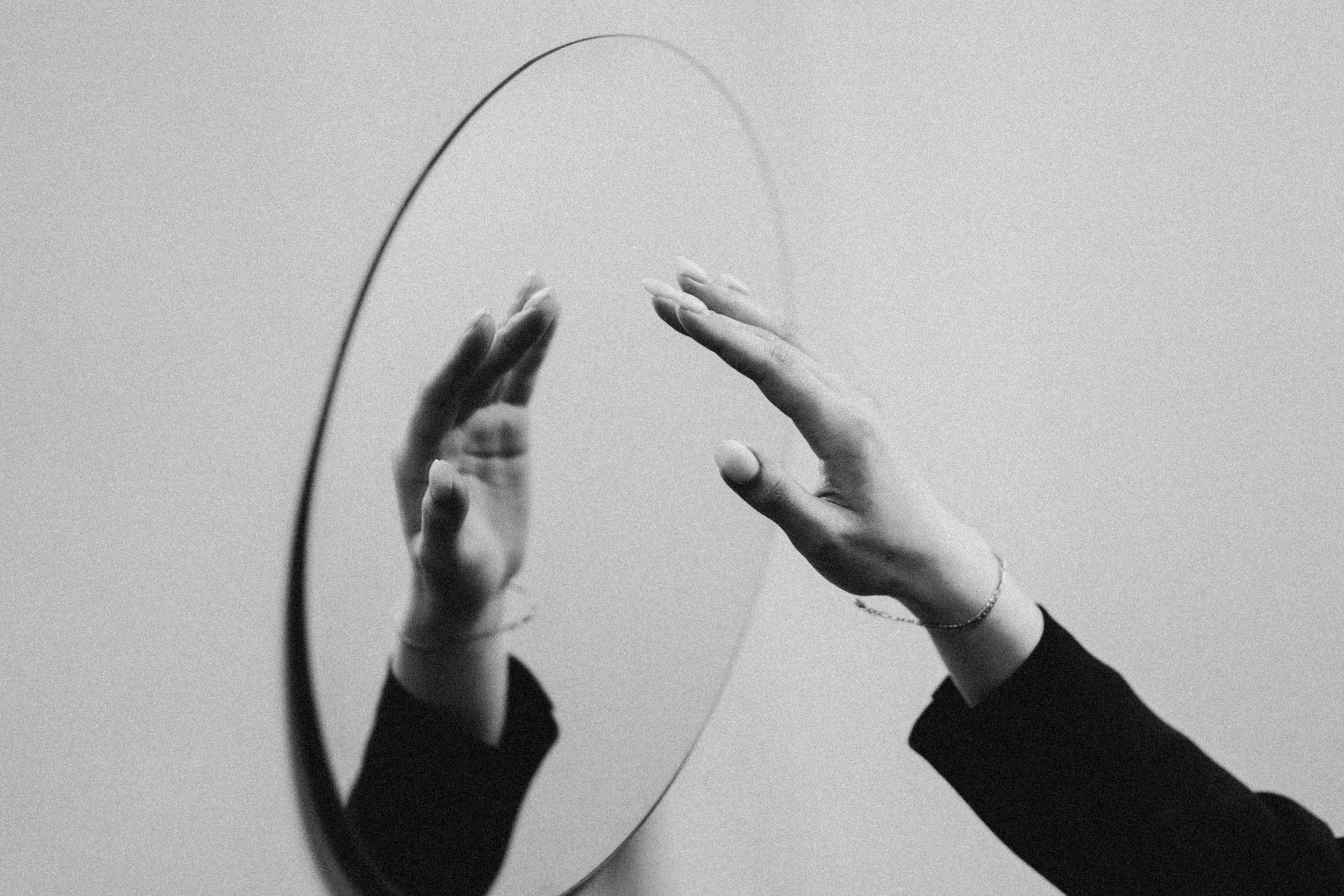
Before beginning this practice with a mirror, it can be helpful to distinguish between the different things we may encounter when we turn inward.
“Inner child” is contemporary psychological language for the younger parts of ourselves that continue to carry memories, emotions, needs, fears, beliefs, and protective strategies formed earlier in life. You might notice her when criticism suddenly makes you feel very small. When rejection feels disproportionately painful. When you desperately want someone's approval. When you hear yourself thinking, I'm too much. I'm not enough. I'm going to be left. I need to get this right.
These reactions are real. But they are not necessarily the deepest truth about who you are.
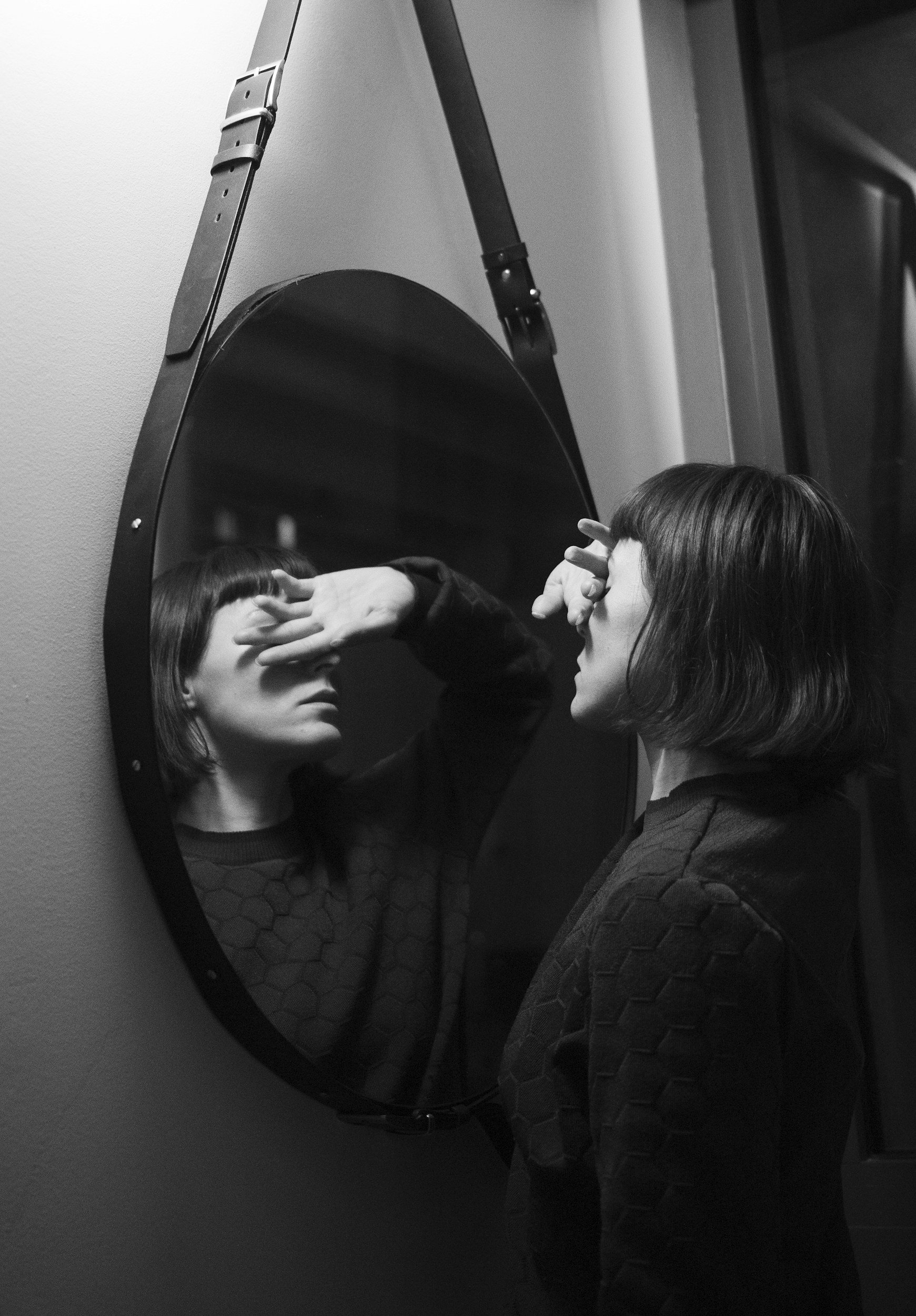
Different spiritual and psychological traditions offer different maps for understanding what lies beneath—and what obscures—our deeper identity.
Jung wrote of the Self as the larger organizing wholeness of the psyche. Yogic traditions describe samskaras: impressions created through our experiences and actions that condition how we perceive and respond to life. Mystical Christianity speaks of the True Self, our identity grounded in God rather than constructed through ego, performance, and separation.
In Toltec teachings, the metaphor of the mirror becomes especially useful. The mind receives and interprets the world like a mirror reflecting an image—but that reflection is affected by everything we have learned to believe. Our conditioning, assumptions, fears, expectations, and stories influence what we think we see.
We aren't simply seeing reality. We are often seeing reality through what we have learned about it.
These traditions are not saying precisely the same thing, and we don't need to flatten them into one philosophy to learn from them. But they offer an intriguing shared invitation: We can learn to observe what has shaped us without assuming that everything we observe is who we are.
A samskara, a childhood wound, a protective pattern, a shadow response—these may influence how I experience the world. They do not have to define the whole of me.
And this is where the mirror becomes interesting.
“Indeed we are running away all the time to avoid coming face to face with our real selves, and we barter the truth for trifles.”
What Happens When You Really Look?
We invite you to find a mirror and sit or stand comfortably in front of it.
Notice the tendency to examine your appearance—to fix your hair, inspect your skin, evaluate your body, or decide whether you like what you see. Then, instead, look directly into your own eyes.
And stay.
Don't try to create a spiritual experience. Don't repeat affirmations you don't believe. Don't force yourself to feel love, compassion, forgiveness, or anything else.
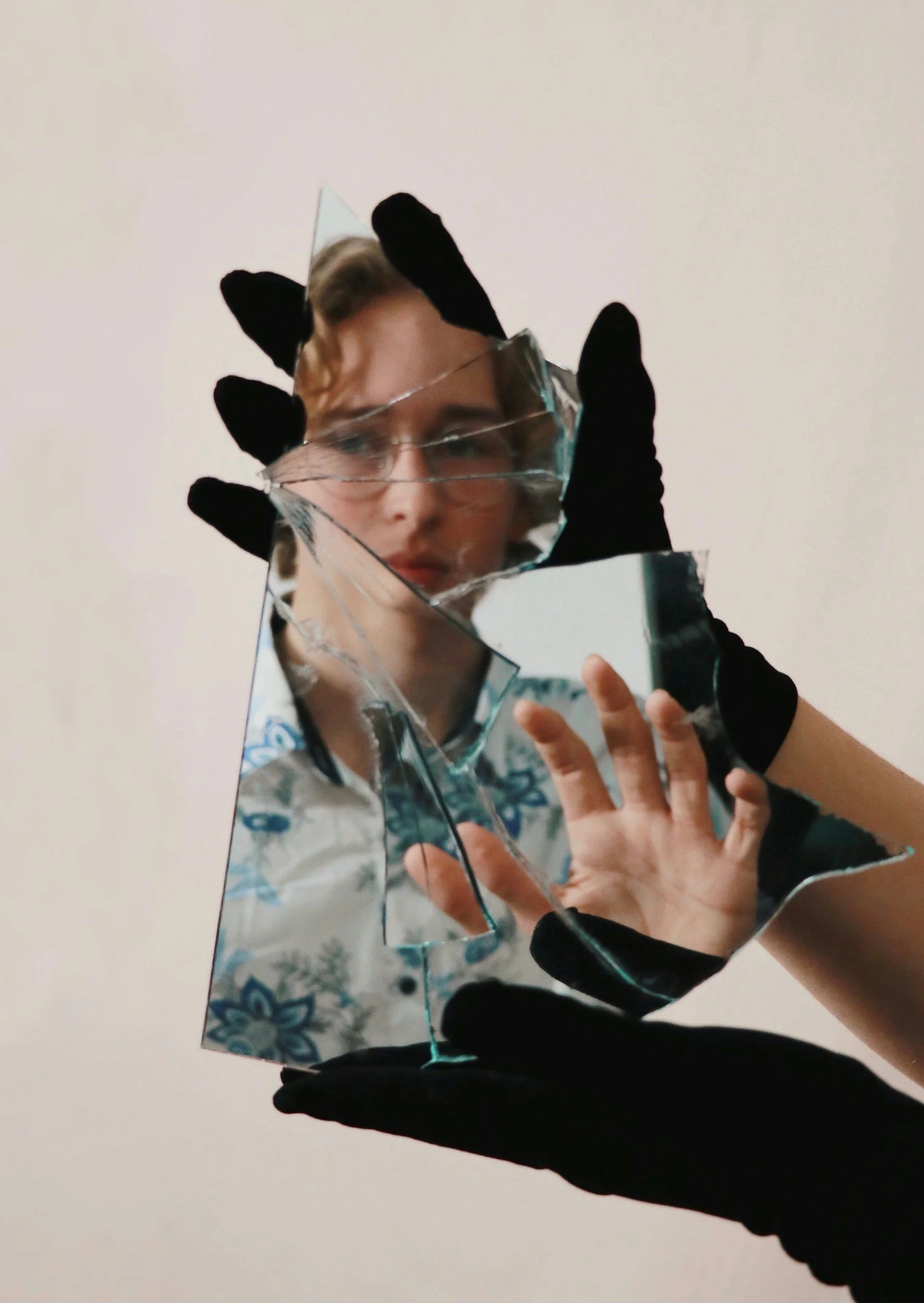
Just notice.
What happens in your body?
Do you want to look away?
Do you immediately begin evaluating your appearance?
Do you feel tenderness? Embarrassment? Sadness? Judgment? Nothing at all?
Does your face suddenly look younger to you?
Does another age or memory arise?
Does a familiar sentence appear?
You're getting old.
You're not beautiful.
You should have done more by now.
Why did you let that happen?
You need to get it together.
Or perhaps:
There you are.
The purpose isn't to decide which response is correct. The practice is seeing what is already there.
Meeting the One in the Mirror
Stay with your reflection for a few minutes. If it feels supportive, place a hand over your heart or somewhere else on your body that helps you feel grounded. Then begin asking questions—not as an interrogation, but with curiosity.

Seeing
What do I notice when I look at myself?
Where does my attention go first?
What am I judging?
What am I trying to correct?
What is difficult for me to look at?
What do I appreciate but rarely acknowledge?
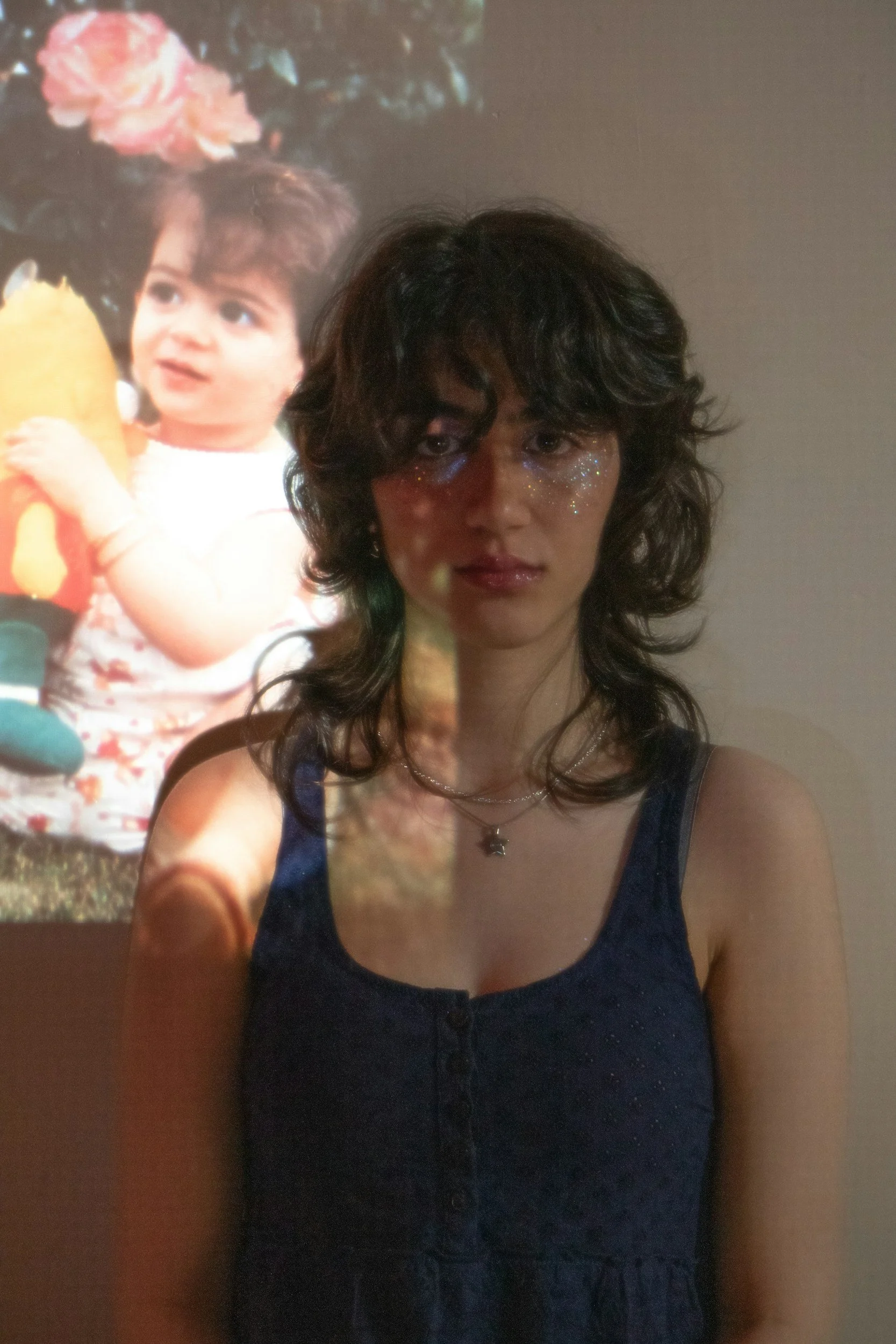
Meeting the Inner Child
As I look into my eyes, how old do I feel?
Is there a younger version of me who seems particularly close today?
What did she learn she needed to be in order to belong?
What parts of herself did she learn to hide?
What did she need that she didn't know how to ask for?
What did she believe about herself that may no longer be true?
What would I like her to know now?
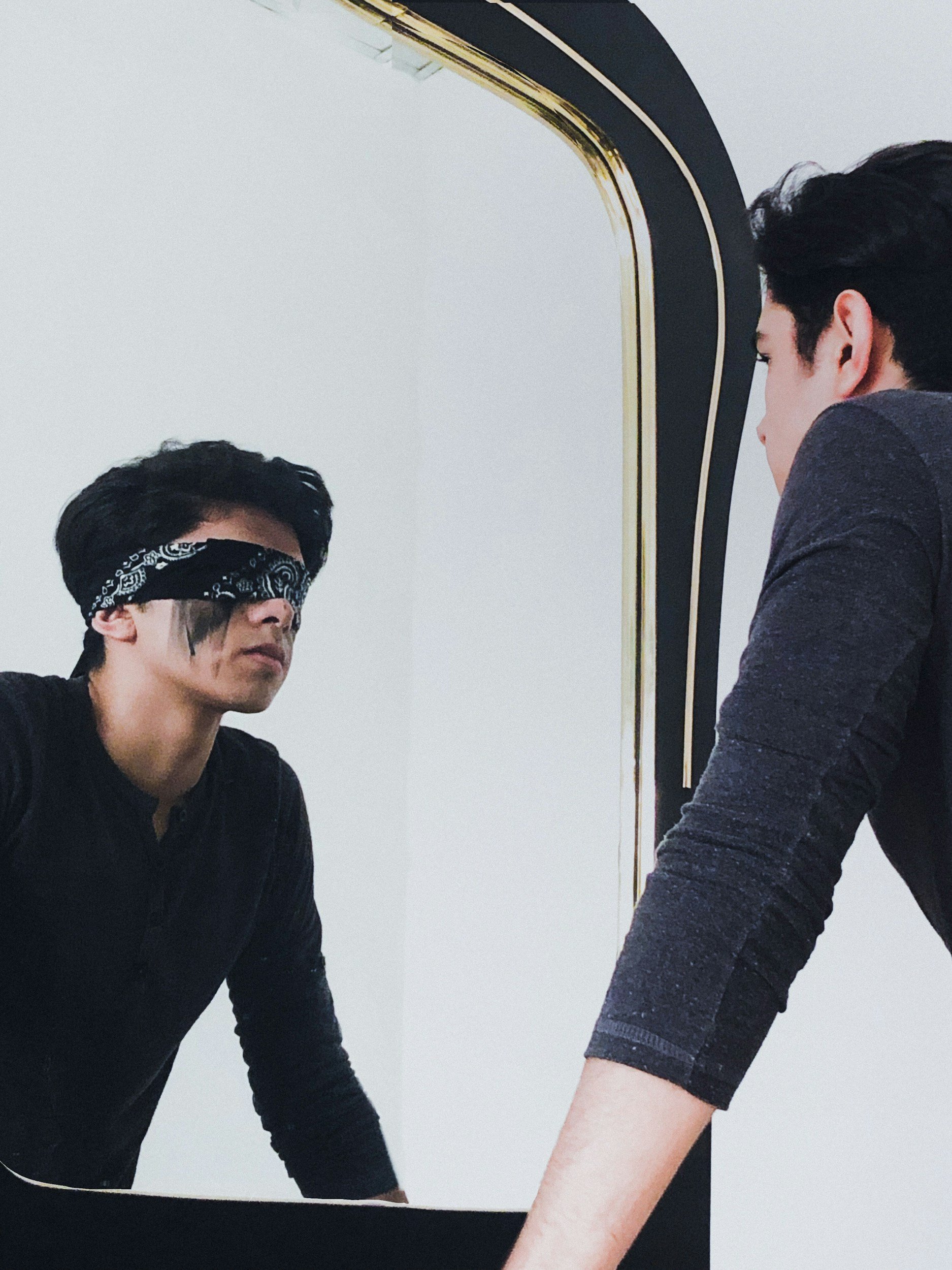
Seeing the Pattern
What story keeps repeating in my relationships?
What am I afraid will happen if I disappoint someone?
Whose approval am I still trying to earn?
What happens inside me when I feel rejected, criticized, ignored, or misunderstood?
Where might an old wound be interpreting a present experience?
What belief about myself feels so familiar that I rarely question whether it is true?
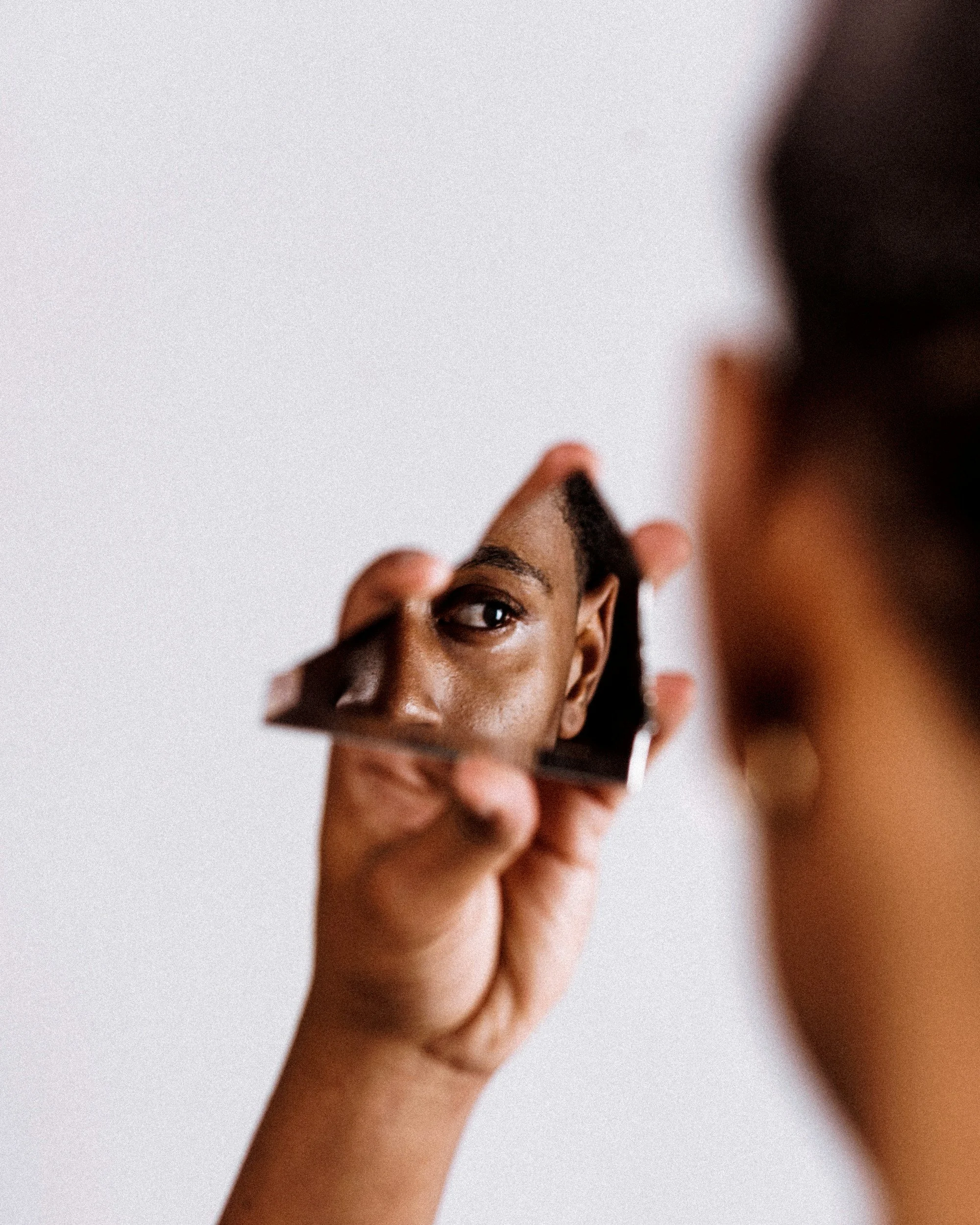
Remembering the Self
And then, perhaps the most important questions:
Who is noticing all of this?
Who am I beneath the roles I perform?
Who am I beneath other people's expectations?
Who am I beneath my accomplishments and failures?
Who am I beneath the stories I've inherited about who I should be?
What remains when I don't try to improve, defend, explain, or perform myself?
Can I simply stay here and witness myself?

You Don't Have to Fix What You See
This may be the most important part of the practice. When something uncomfortable appears, our instinct is often to turn immediately toward healing it, reframing it, releasing it, forgiving it, or transforming it.
Even our healing practices can become another form of self-rejection: Here's another part of me that needs fixing. Mirror work offers another possibility.
What if the first practice is simply presence?
I see the frightened part.
I see the angry part.
I see the child who wants approval.
I see the woman who learned to be strong.
I see the part that is still grieving.
I see the part that doesn't trust yet.
I see the part that desperately wants to be chosen.
And I don't have to exile any of them.
Perhaps integration begins not when every wounded part of us has finally been healed, but when we stop abandoning ourselves whenever those parts appear. The mirror becomes less a place of evaluation and more a place of relationship. A place to practice staying, to practice witnessing, and a place to practice remembering:
This is something I carry.
This is something I learned.
This is something I feel.
And none of it, by itself, is the whole of who I AM.
“Consider that, if you are a reflection of others and they are a reflection of you, then your inner work is not just a gift to yourself; it’s a gift to others as well. Think of one small part of this gift that you’d like to reflect out into the rest of the world...Now open your eyes, look into the mirror, and give yourself this gift.”
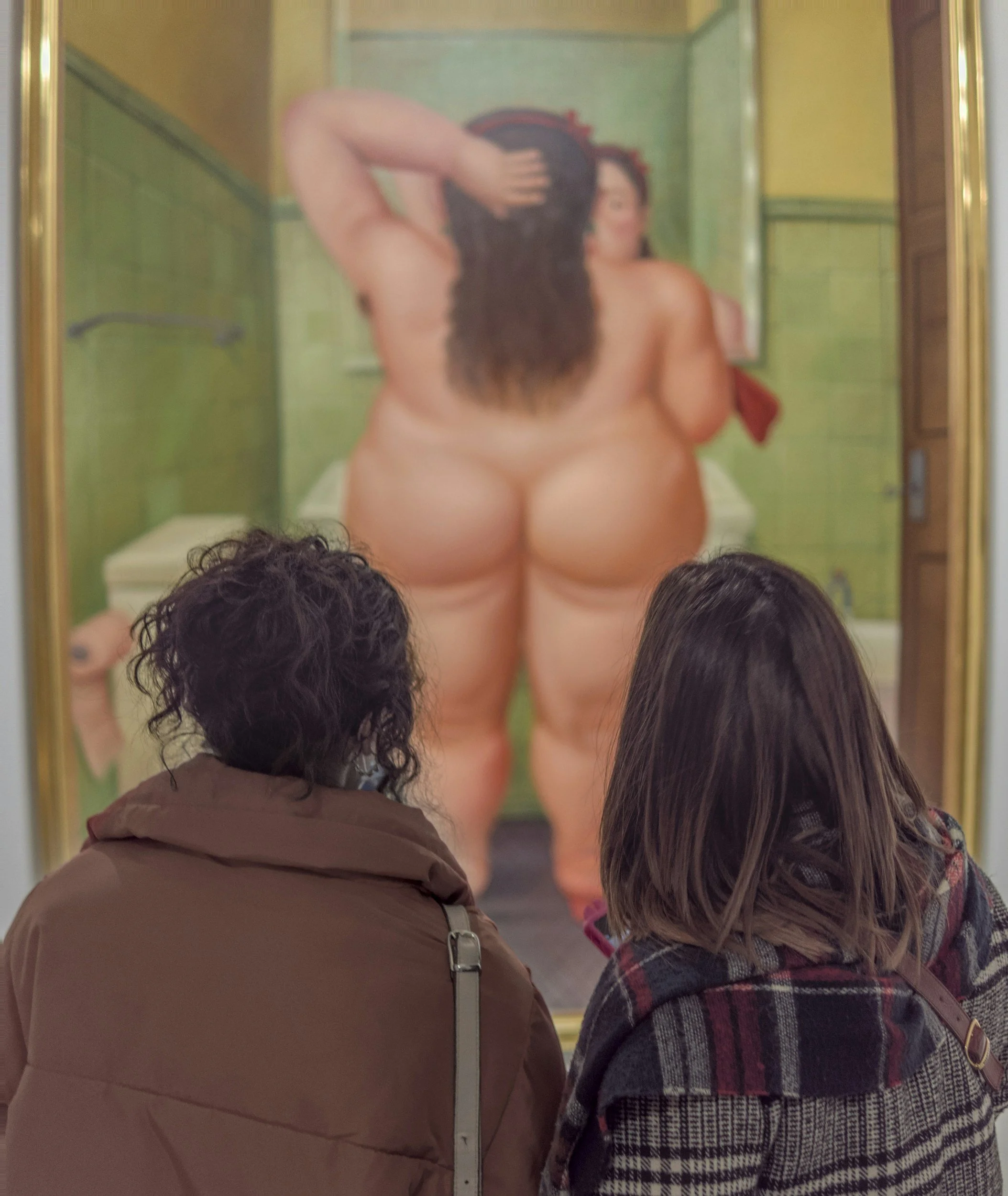
What We Reflect
There is another mirror waiting for us when we finally turn away from the glass: each other.
The Toltec teachings of Don Miguel Ruiz Jr. say that we encounter ourselves reflected in the world around us. The qualities we admire in another person can awaken something in us. So can the qualities that irritate, threaten, or provoke us. Our relationships reveal our expectations, wounds, desires, defenses, and capacity to love.
“All of us here on this planet are struggling with the same search for meaning and happiness; we all experience joy, pain, suffering, and love. But, even if you see reflections of yourself in all others and in the world at large, that doesn’t mean you can control them. The only thing you are truly able to control is yourself, which is then reflected back out into the world, for good or ill. When you’re able to see this truth, you are better able to navigate your relationships and your community with grace and respect. We are each other’s mirrors.”
This doesn't mean that everything another person does is secretly “about us,” or that harmful behavior should be excused as our projection. Discernment still matters. But our reactions can become information.
The mirror asks us to become curious about what belongs to us. And that means this inner work is never entirely individual. As we become more conscious of the fear, shame, judgment, tenderness, compassion, creativity, and Love we carry within ourselves, we begin changing what we bring into relationship.
“When you look into another’s eyes, you are seeing a reflection of yourself. This isn’t a lesson in narcissism; it’s a lesson in finding connection and realizing that each person you encounter is experiencing the same desires for happiness, the same despair, the same disappointments that you are.”
What we practice inwardly becomes something we are capable of offering outwardly. So before leaving the mirror, consider one final question:
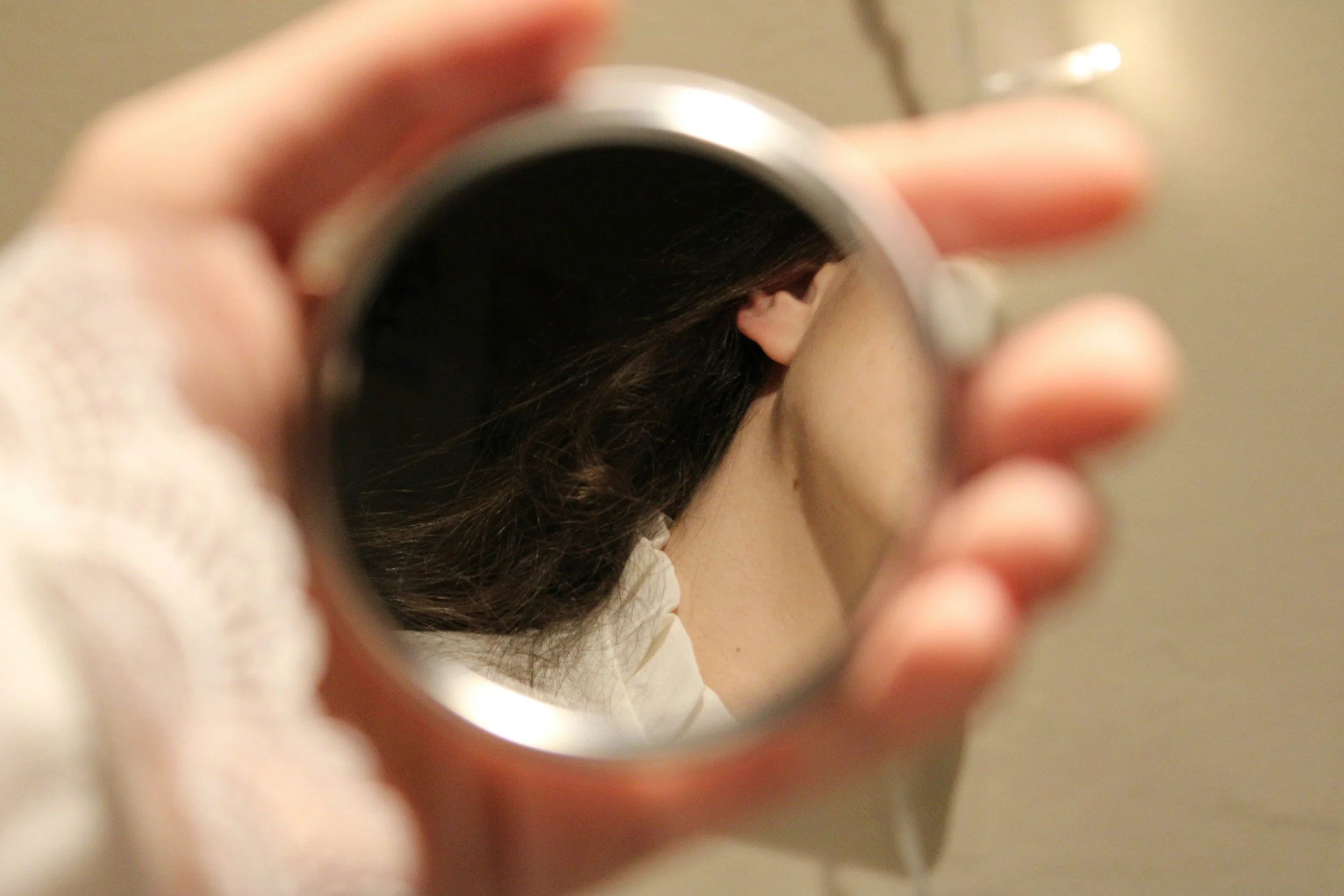
What do I want to reflect into the world?
Perhaps calm in the presence of chaos.
Compassion instead of judgment.
Curiosity instead of defensiveness.
Courage instead of hiding.
Love instead of fear.
Look once more into your own eyes.
And rather than asking the person in the mirror to become someone else, practice offering her the very thing you hope to carry into the world. Because perhaps learning to see ourselves clearly is not the end of the practice. Perhaps it is how we begin learning to see everyone else more clearly, too.
Practice Being Seen
Mirror work doesn't end when we step away from the glass. Some of our clearest mirrors are found in relationship.
Loto Circles are intentionally small virtual spaces where we practice seeing and being seen—bringing curiosity to the patterns that emerge in relationship, listening without fixing, and discovering more of ourselves through one another.
If you're ready to practice this work alongside other people who are also learning to show up more consciously, please consider joining an upcoming Loto Circle Invitational.
Disclosure: This post may contain affiliate links. If you click through a link and make a purchase, it will earn me a small commission, at no additional cost to you! See our disclaimer for details.
Dig Deeper…


While death reveals attachment and asks us to let go, the shadow shows us why we can't…