"The song and the drumming were like this: Behold, a sacred voice is calling you; All over the sky a sacred voice is calling."— Black Elk, Oglala Lakota Holy Man

Mothers Ileana and Ara praying at the waterfall during Forest Church
There has been a lot of drumming at the House of Loto this summer. Mother Ileana drums. Mother Ara drums. We've drummed around fires, at Forest Church, and in ceremony. Sometimes there is singing. Sometimes movement. Sometimes there is simply the steady repetition of a drumbeat. I even found myself joining a women's drumming and singing circle in Crestone.
Apparently, the drum had something to teach me.
Over the last decade or so, I've become increasingly curious about ancient forms of prayer and spiritual practices—particularly traditions that many of us in the colonized American West were never taught to recognize as prayer.
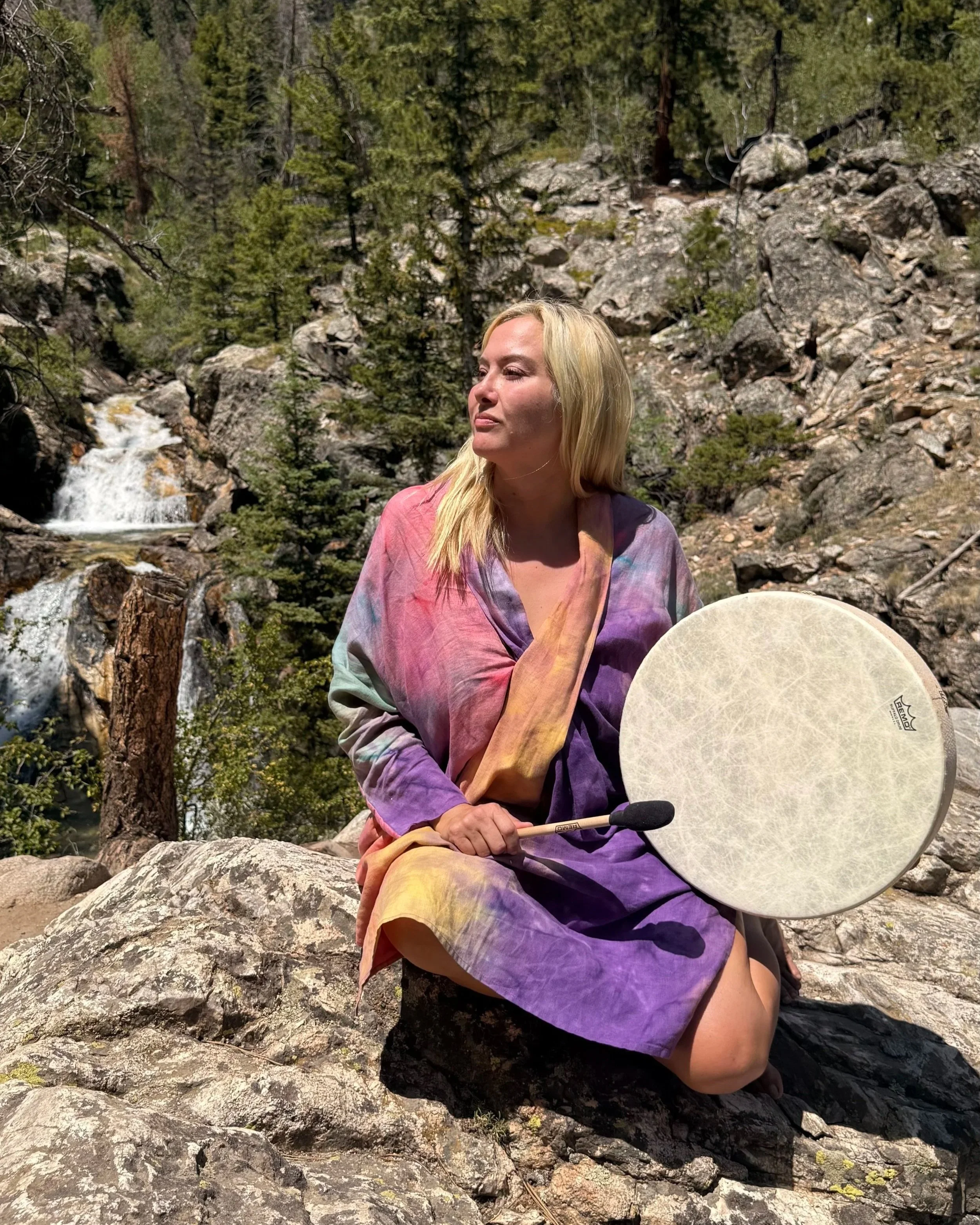
reclaiming my voice and healing my throat chakra by singing and drumming at the waterfall
And lately I've fallen down a bit of a research rabbit hole around rhythm and sound healing.
Humans have been using repetitive sound in ritual for a very long time. Archaeological evidence suggests percussion instruments existed in the Paleolithic, and rhythmic sound appears across cultures as a means of entering ritual, contemplative, and altered states of consciousness.
What's especially fascinating to me is that modern neuroscience is beginning to investigate what humans seem to have understood experientially for thousands of years.
The women’s drum and singing circle in Crestone, CO
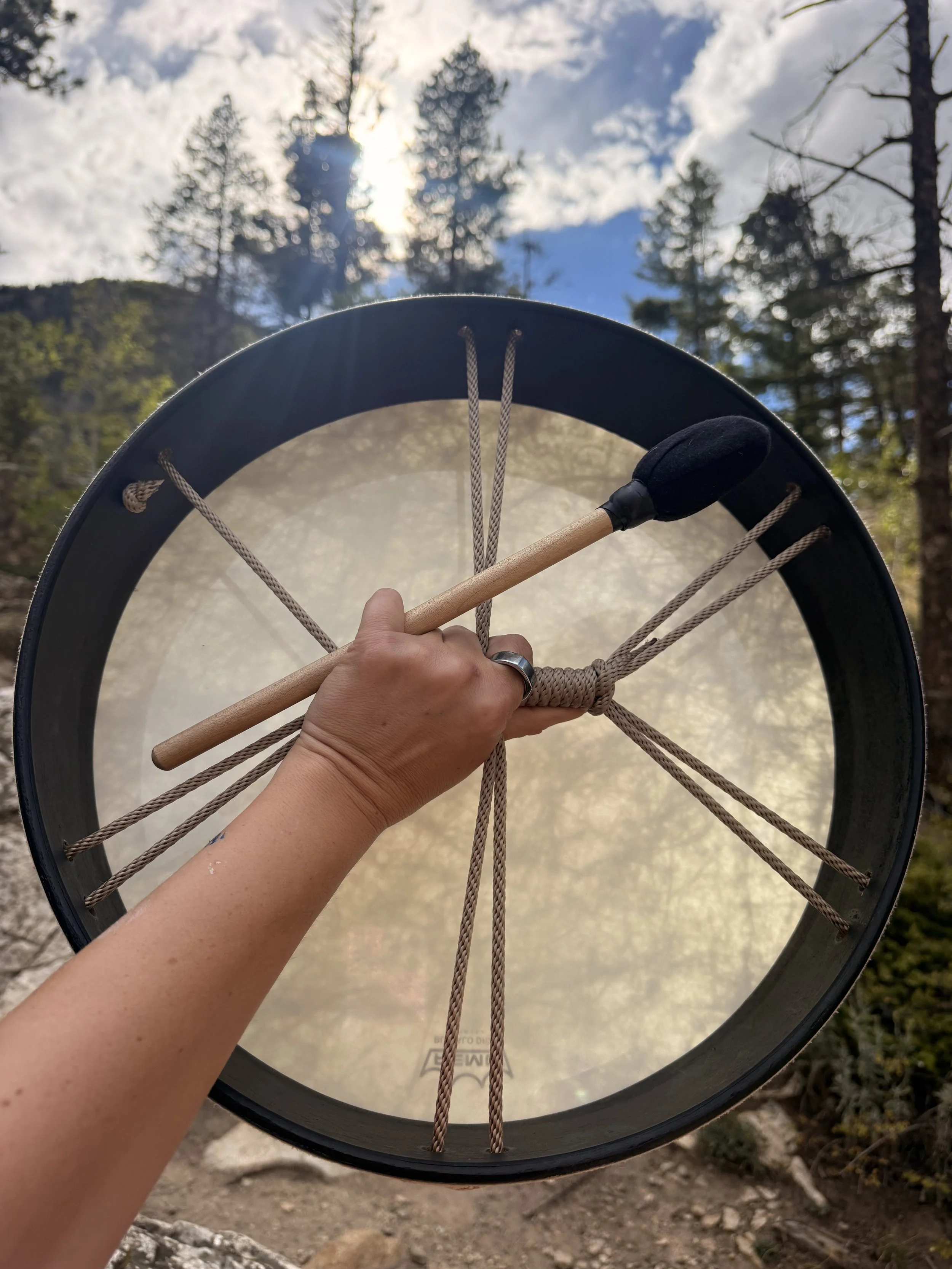
My favorite drum
A recent review in the Annals of the New York Academy of Sciences looked at research on drumming, chanting, mantras, and other repetitive sounds. Across the studies, rhythmic sound was associated with states of absorption and relaxation. Some drumming studies also observed reductions in heart rate and cortisol consistent with a shift toward parasympathetic activity—the part of our nervous system associated with rest and restoration.
Researchers are even exploring whether neural entrainment may be part of what is happening: patterns of neural activity synchronizing with features of an external rhythm. In other words, our brains quite literally respond to rhythm.
The science is still young. The practice most definitely is not. And I love that.
There is something wonderfully humbling about science beginning to find language for something human beings have known through their bodies for generations.
Rhythm changes us.
Maybe that's part of why the drum has become such a powerful teacher for me.
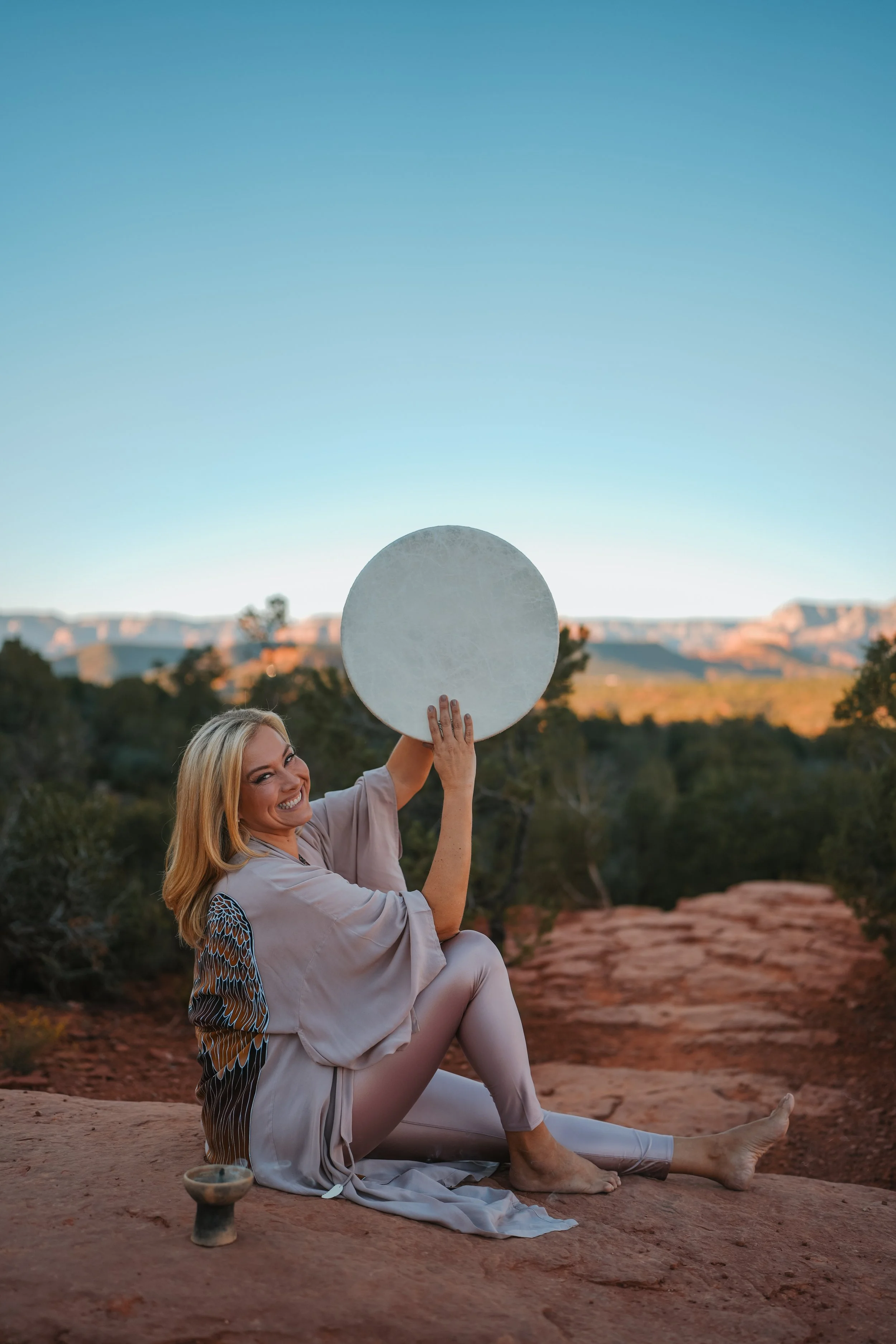
From my photoshoot in Sedona, AZ in 2025
I grew up surrounded by music in church. Music wasn't missing from my spiritual formation at all. Quite the opposite. But I became accustomed to one particular expression of sacred music: a worship band on a stage, singing familiar songs in English, within a familiar Christian framework.
That was what worship sounded like. Everything else sounded...different. And humans tend to do something interesting with the unfamiliar. We can mistake this is different from what I know for this doesn't belong.
I'm becoming much more curious about that instinct.
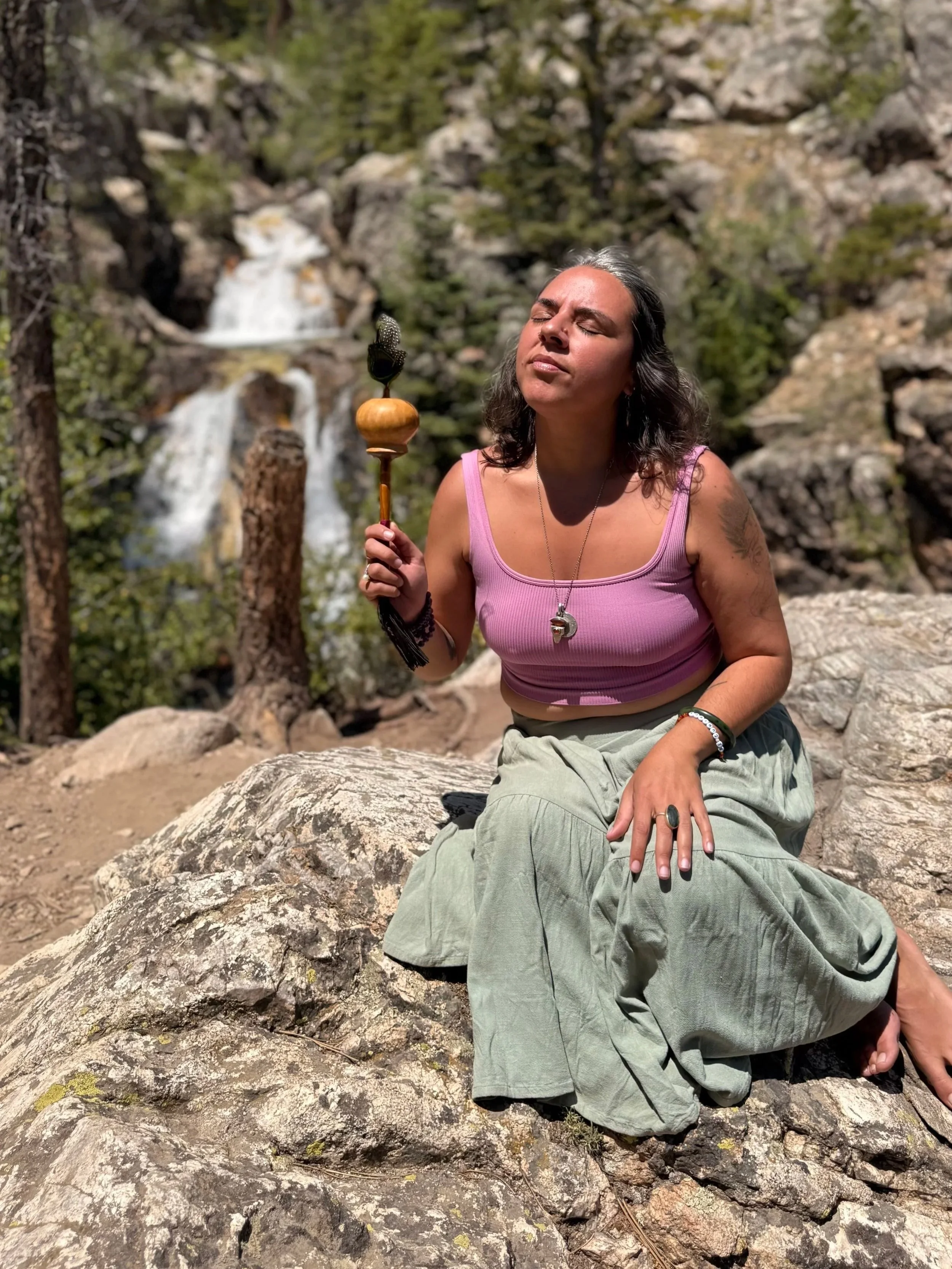
Mother Ara singing at the waterfall
This summer, I've been learning prayer songs in Lakota. I've been sitting around drums. I've been singing songs from traditions other than my own. And rather than any of this diminishing the traditions that remain my spiritual mother tongue, it has been expanding my vocabulary for communion with God.
I am learning to hear prayer differently. Sometimes prayer sounds like words spoken to God. Sometimes it sounds like silence. Sometimes it sounds like many voices repeating the same phrase until the distinction between my voice and our voices becomes harder to find.
And sometimes: Boom…Boom…Boom…Heartbeat…Prayer.
I'm particularly drawn to songs that honor Creation—the Earth beneath us, rivers, water, animals, ancestors, one another. One I've loved singing lately is Mother I Feel You, a simple circle song that moves through Earth, river, eagle, Spirit, and relationship.
That kind of prayer once would have felt much farther outside my comfort zone. Now I find myself asking why.
I've had Christian friends ask why I would sing to a river or to Mother Earth—as though honoring Creation means worshipping Creation instead of Creator. That's a conversation for another time. For now, I'm much more interested in what happens when I stop needing every spiritual practice to sound familiar before I'm willing to become curious about it.
Disclosure: This post may contain affiliate links. If you click through a link and make a purchase, it will earn me a small commission, at no additional cost to you! See our disclaimer for details.
Dig Deeper…
Researchers are even exploring whether neural entrainment may be part of what is happening: patterns of neural activity synchronizing with features of an external rhythm. In other words, our brains quite literally respond to rhythm.