
The Returning: The Way of the Explorer
“It is clear to me now that even though plant medicines and ceremonies can activate an experience or the memory of present moment awareness, these outer tools can only point to the journey. They are the signposts, not the road itself.”—Michael Brown, The Presence Process
There are moments in the spiritual life when the familiar paths no longer feel sufficient.
Prayer still matters.
Scripture still speaks.
Community still holds us.
And yet—a holy discontent stirs. Not a dissatisfaction with God, but a longing to encounter I AM beyond the edges of what we already know.
The Explorer is one who follows that longing inward. This pathway is not about novelty, escape, or transcendence for its own sake. It is about expanding conscious awareness—the careful, reverent exploration of the inner sanctuary of consciousness, our True Self.
The Human Search for Direct Encounter
Across cultures and centuries, human beings have described moments when ordinary perception seems to give way to something more. Mystics have written of union, illumination, timelessness, overwhelming Love, dissolution of the ordinary sense of self, visions, revelation, and an encounter with a reality that seems larger than what words can hold.
Christian mystics have described experiences of profound communion with God. Sufi mystics have explored intimacy with the Divine through love and remembrance. Hindu traditions contain sophisticated explorations of consciousness, meditation, and states of absorption. Buddhist contemplative traditions have mapped experiences of insight, non-ordinary awareness, and transformations in the perception of self and reality.
Some Indigenous cultures also hold ceremonial traditions through which altered or expanded states of awareness may be understood within specific relationships to land, ancestors, community, spirit, and cosmology. These traditions belong to particular peoples and lineages; they should not be reduced to techniques or borrowed simply because we find the experiences compelling.
More recently, neuroscience, psychology, and psychedelic research have begun investigating some forms of mystical and non-ordinary experience through entirely different lenses.
These traditions and disciplines do not necessarily agree about what these experiences mean. And perhaps that distinction matters.

The Explorer does not need every mystical experience to prove the same theology. The invitation is not to collect extraordinary experiences or use them as evidence that we have discovered the ultimate nature of reality.
It is to remain curious.
What did I experience?
What did it reveal?
What assumptions did it disrupt?
What remains after the experience has passed?
Has it made me more loving, more present, more compassionate, more free?
Because an extraordinary experience is not necessarily a transformative one.
Across traditions, the deepest question may not be What did you see?
But rather:
Who are you becoming because of what you encountered?
The Inner Sanctuary
Christian mystics have long taught that the soul is encountered within an interior landscape. Teresa of Ávila called it the Interior Castle. Jesus called it the kingdom within. The Desert Mothers and Fathers spoke of descending from the mind into the heart. The Explorer takes this teaching seriously.
Rather than seeking God “out there,” the Explorer turns inward—not in self-absorption, but with curiosity—trusting that Conscious Awareness does not lead away from God, but into God.
This exploration may arise through various doorways:
contemplative practices
and sacred medicines
What unites these is not the method, but the posture: listening rather than controlling, receiving rather than achieving, surrender rather than striving, nonattachment rather than attachment. The Explorer is open to mystical encounter — but is oriented toward transformation, not just experience.

Ancient Wisdom, Held with Reverence
Long before modern psychology or neuroscience named “altered states of consciousness,” Indigenous cultures across the world understood that there are liminal spaces where the veil thins—where the ego loosens and deeper truth can be revealed.
These traditions did not treat such spaces casually. They were approached with ritual, community, preparation, and reverence. Exploration was never about entertainment. It was about healing, humility, and alignment.
Within The Great Returning, this matters deeply.
The Way of the Explorer does not extract or romanticize Indigenous wisdom. It honors it. It remembers that Western Christianity once held similar respect for fasting, visions, and ecstatic prayer—before fear and control narrowed the imagination of what communion with God could look like.
Exploration is not the goal of the spiritual life. But sometimes, exploration becomes the doorway through which I AM dismantles what no longer serves Love.

The Nondual Lens: Awareness, Not Acquisition
From a nondual perspective, exploration is not about acquiring new spiritual experiences. It is about revealing what has always been present.
The Explorer does not “go somewhere else” to find God. They awaken to the truth that God has always been closer than breath.
Awakened Consciousness often reveals this paradox:
Ancient Containers for Exploration
Across Indigenous cultures, exploration of consciousness has rarely been approached individually or casually. Practices such as the temazcal — a ceremonial sweat lodge — function not as experiences to be consumed, but as communal containers of purification, humility, and prayer. Entered with preparation and guidance, the heat, darkness, and breath invite participants into a bodily form of surrender, where resistance softens and deeper listening becomes possible. These traditions remind us that exploration returns us to the community, to the body, and to the sacredness of ordinary life.
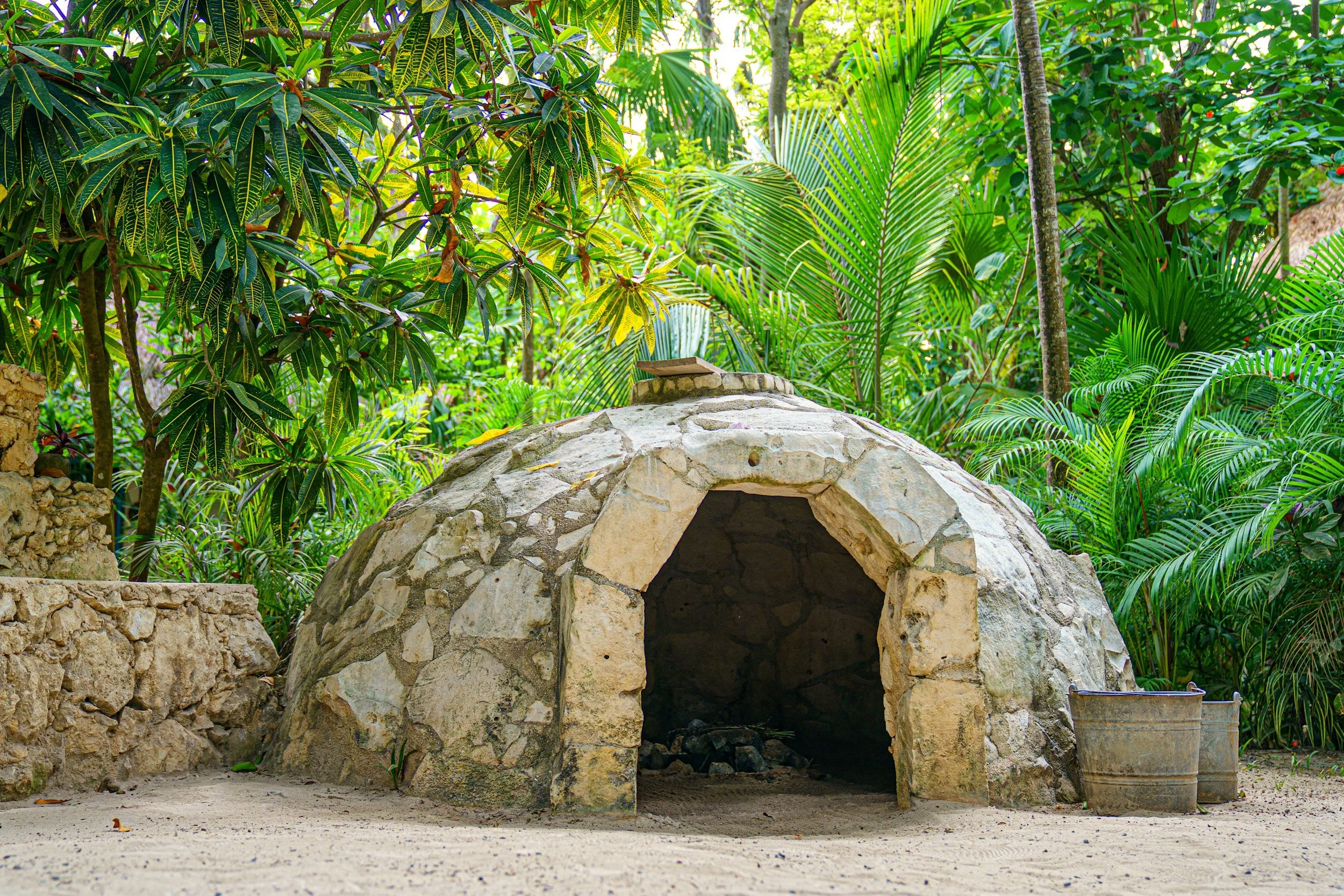
temazcal — a ceremonial sweat lodge
The Edge of the Explorer
Every pathway has its discernment point. For the Explorer, the danger is mistaking experience for maturity—confusing intensity with intimacy, or insight with integration. Exploration without grounding can fragment rather than heal.
Psychedelics — when used lawfully, ethically, and within trusted ceremonial or therapeutic contexts — can induce altered states of consciousness that soften rigid identity structures, quiet habitual thought patterns, and open access to deep emotional and spiritual material. For some, these states have become places of profound repentance, grief, surrender, forgiveness, and renewed intimacy with God.
Yet these experiences are never the goal. They are threshold moments, not destinations. Without grounding, community, and integration, altered states can confuse rather than heal. Exploration, when held wisely, always returns us to embodiment, relationship, and responsibility — not away from them.
Because what we glimpse in expanded present moment awareness often needs to be mirrored and witnessed if it is to become embodied Love.
Reflection Questions
Have you ever sensed God inviting you beyond familiar forms of prayer or understanding?
What does “expanded conscious awareness” evoke in you—curiosity, fear, resistance, longing?
How might exploration become a practice of humility rather than escape?
Suggested Practice: Interior Listening
Set aside 20 minutes in a quiet, safe space. Sit comfortably. Breathe slowly. Instead of directing prayer outward, simply notice awareness itself.
Ask gently: “God, what is already here?”
Do not chase answers. Let awareness widen. Let whatever arises be met with kindness. End by grounding—touch the earth, drink water, return to the body.
Exploration is only holy when it leads us back to presence.
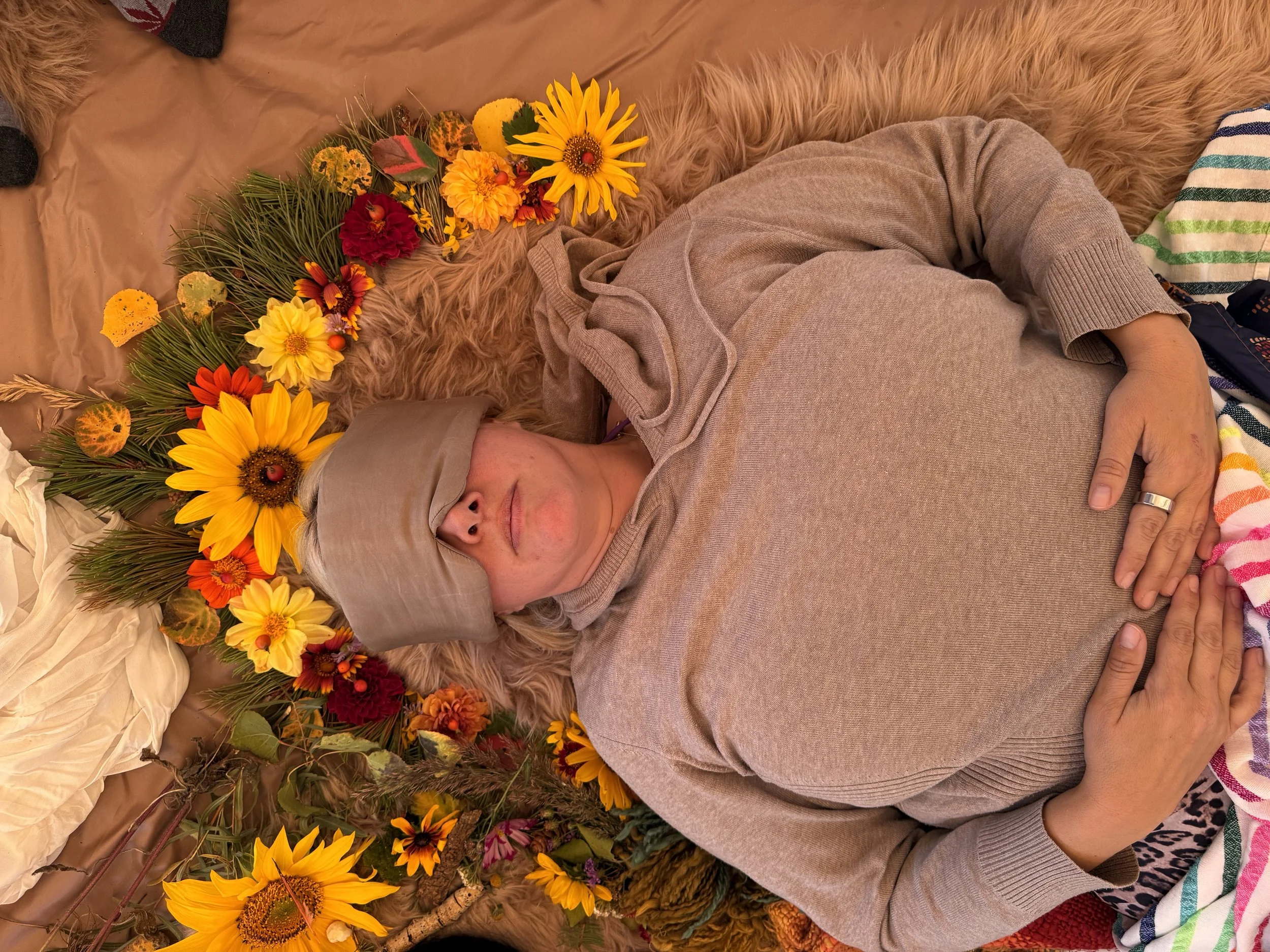
Jennifer exploring her Self at one of our AWAKEN retreats
Founder’s Note:
Through personal experience, I’ve come to trust that God meets us not only in structure and silence, but also in the brave, humble exploration of the inner world. My own journey with the usage of sacred medicines has taught me that conscious awareness—when approached with reverence, discernment, and support—can become a powerful doorway into healing, surrender, and deeper communion with I AM.
At Loto, we hold these spaces carefully. Whether through contemplative practices, sacred medicine ceremony, or immersive retreats, exploration is never about chasing experiences—it is about creating safety for truth to emerge and integration to follow.
If you feel called to explore the inner sanctuary with wisdom, humility, and support, you are not alone here.
With Love, unconditionally— Jennifer
Next in The Great Returning
Every pathway is a way of communing with God. Each one opens the heart through a different door — understanding, stillness, service, love. But there are moments in the spiritual life when the familiar doors no longer open as they once did. When the mind reaches its edge, and the soul senses that something deeper is asking to be explored.
What is revealed in exploration must be reflected in relationship. What is uncovered within must be witnessed by another.
Next, we turn toward The Way of the Mirror — where God meets us not in altered states of consciousness, but in shared presence; where community becomes the place we see ourselves clearly, are lovingly revealed, and learn to belong without hiding.
Disclosure: This post may contain affiliate links. If you click through a link and make a purchase, it will earn me a small commission, at no additional cost to you! See our disclaimer for details.
Dig Deeper…
You May Also Like…



Let the serene stillness of winter and the gentle guidance of this meditation draw you into a place of rest and renewal. Embrace the beauty of this quiet season as you walk with God through His creation.