
One of Jennifer’s vision boards, with Jesus always at the center.
Vision boards can get a bad rap. For some, they've become synonymous with manifestation culture: paste the dream house, perfect relationship, passport stamps, and overflowing bank account onto a board, visualize it hard enough, and somehow the Universe will deliver.
I understand visioning differently.
I don't create vision boards because I believe I can control the future—or because I believe there is one predetermined blueprint for my life that I need to correctly decipher. I create them as a contemplative and creative practice of attention.
Visioning gives us space to listen to desire, imagination, intuition, the wisdom of the body, the circumstances of our lives, Creation, and the Divine—and to notice what begins to emerge when we bring all of those voices into conversation.
A vision board isn't a contract with the future. It's a way of becoming curious about what might be possible.
Visioning as a Practice of Imagination
At Loto, we talk a lot about flourishing—not as the achievement of some perfected version of ourselves, but as becoming more fully alive.
That requires more than goals. It requires imagination.
Before we can participate in creating something new—in our lives, relationships, communities, or world—we have to become capable of imagining possibilities beyond what already exists. Visioning gives imagination somewhere to play.
A vision board creates a physical space for that exploration. Images, words, colors, textures, and symbols allow us to engage parts of ourselves that don't always communicate through linear thought. Sometimes we are drawn to something before we understand why.
The goal isn't to force those images into a predetermined plan. It's to pay attention.
Visioning as Co-Creation
For me, visioning has also become a practice of co-creation, which asks something different from both control and passivity.
We are not solely responsible for making everything happen. But neither are we passive observers waiting for life—or God—to happen to us. We participate. We listen. Imagine. Choose. Experiment. Respond. Create. Release. Begin again.
And all the while, Life is responding too—through relationships, opportunities, limitations, loss, surprise, timing, and circumstances we could never have planned.
This leaves room for desire without demanding that every desire become reality. It leaves room for prayer without assuming there is one predetermined blueprint we must correctly decipher. And it leaves room for Mystery—for the possibility that what ultimately unfolds may be different, and perhaps more expansive, than anything we could have placed on the board.
A vision, then, is not a fixed destination. It is a relationship between intention and surrender.


How I Create My Vision Boards
Over the years, my vision board practice has evolved, but I continue to return to three focus areas for my life: Life, Purpose, and Relationship.
I like separating them into separate boards because it gives each dimension room to speak. It also helps me notice where I may be overemphasizing one part of my life while neglecting another.
These aren't rigid categories, and there is plenty of overlap between them. Think of them simply as different lenses through which to imagine what flourishing might look and feel like.
LIFE — How do I want to experience being alive?
This board is less about what I want to have and more about how I want my life to feel. I think about the rhythms I want to cultivate, the places I want to experience, how I want to inhabit my body, my relationship with nature, adventure, rest, beauty, pleasure, spirituality, home, health, and play.
Rather than asking only, What do I want to do this year?, I ask: What makes me feel most alive?
What kinds of experiences bring me into greater presence? Where do I feel spacious, curious, energized, grounded, or free? What have I been longing to experience more fully?
Some images may represent literal desires—a place I want to visit or an experience I want to have. Others may simply capture a feeling I want to cultivate. Both belong on the board.
PURPOSE — What feels mine to create, contribute, explore, or tend?
Purpose doesn't have to mean finding one grand calling. For me, it is much more alive than that.
This board holds what I feel drawn to create, learn, build, offer, explore, or nurture. It might include my work, creative projects, service, leadership, spiritual practice, collaboration, or ideas that I don't yet know what to do with.
I pay attention to what gives me energy. What am I curious about? What wants to be created through me? What feels worthy of my attention and care?
Some years, this board contains very clear projects. Other years, it is filled with symbols, words, textures, and ideas that don't make sense until much later. I let both be enough.
RELATIONSHIP — How do I want to love, belong, and be known?
We do not flourish alone. This board invites me to consider the relationships I want to cultivate—with partners, friends, family, collaborators, community, and myself.
Rather than envisioning particular people behaving the way I want them to, I focus on the quality of relationship I want to practice and experience.
What does reciprocity feel like?
Where do I want greater intimacy, honesty, play, tenderness, or belonging?
What boundaries might allow relationships to become healthier?
Where am I being invited to let myself be more fully known?
This keeps the practice rooted in who I can choose to be in relationship rather than trying to create a board that controls who—or what—shows up in my life.
Together, these three boards give me a way to listen across the landscape of my life:
How do I want to live?
What do I want to tend?
How do I want to love?
I don't need to know exactly where any of it will lead. The practice begins with paying attention.
The Practice of Making
Once I have created some spaciousness around these three areas, I begin gathering materials:
Gathering Supplies
magnetic whiteboard, or poster board, or corkboard
magnets, or tape/glue, or pins
magazines
scissors
photos
soaking music playlist
I prefer making physical vision boards with magazines, scissors, glue, and paper rather than searching for specific images online. There is something important, for me, about the tactile experience—and about not knowing exactly what I am looking for.
I put on music. I spread magazines across the floor or table. And then I begin flipping through them slowly, noticing what catches my attention. I try not to search. I try to notice—A photograph. A color. A landscape. A face. A texture. A single word or phrase. If something makes me pause, I tear it out.
Only after I have gathered a collection of images do I begin arranging them, allowing relationships and patterns to emerge before I glue anything down. The finished board matters. But increasingly, I have come to believe that the making is the practice.
Don't Explain It Yet
One of my favorite parts of visioning is choosing images before I understand them. Rather than searching for a picture that represents something I've already decided I want, I notice what creates a response in me.
What makes me curious? What creates energy, longing, beauty—or even discomfort? What do I keep returning to?
I don't need to know why yet.
This is part of what makes vision boarding a contemplative practice rather than simply an illustrated goal list. Creativity sometimes perceives possibilities before the analytical mind has language for them. So I cut it out. Meaning can come later.
Sometimes an image eventually reveals a very literal desire. Other times, I discover that what drew me to the photograph wasn't the thing pictured at all—it was the feeling, quality, or possibility the image represented. That discovery is part of the practice.

Sticky notes serve as placeholders while I look for images that resonate.
The Creative Process
With my supplies at the ready, I dive into the creative process while listening to the Spirit’s nudges. I start flipping through magazines, cutting out images and words that resonate with my dreams and passions, trusting that these are divine hints guiding my hand. Each picture and word had a unique meaning to me, from the sun-soaked beaches of Bali symbolizing my desire to travel the world and experience God across varied traditions, to the word "balance" representing my quest for a harmonious life.
Tip: Take your time with this process. For me, this can take days of prayer, soaking music, and lots of magazines to complete a single board.

Refining my board and getting closer to a final version.
The Practice of Attention
Once the boards are complete, I put them somewhere I will continue to encounter them. Not because looking at an image will magically make it appear in my life, but because what we give our attention to influences what we notice.
A vision board keeps certain desires, values, questions, and possibilities within our field of awareness. Over time, we may begin noticing opportunities, patterns, choices, or relationships we previously overlooked.
And sometimes the meaning of an image changes.
A photograph of a villa in Tuscany might initially look like a desire to travel. But perhaps what continues to call to you is actually the long table filled with people, the slow meal, the beauty, the sense of belonging—or an entirely different rhythm of life.
The image becomes less of an item on a wish list and more of a question: What is this showing me about the life I long to inhabit?
That is why I return to my boards throughout the year—not to measure whether I've successfully manifested everything on them, but to keep listening. What still feels alive? What has changed? What am I noticing now that I couldn't see when I made the board?
The board becomes less a picture of the future and more a conversation with it.
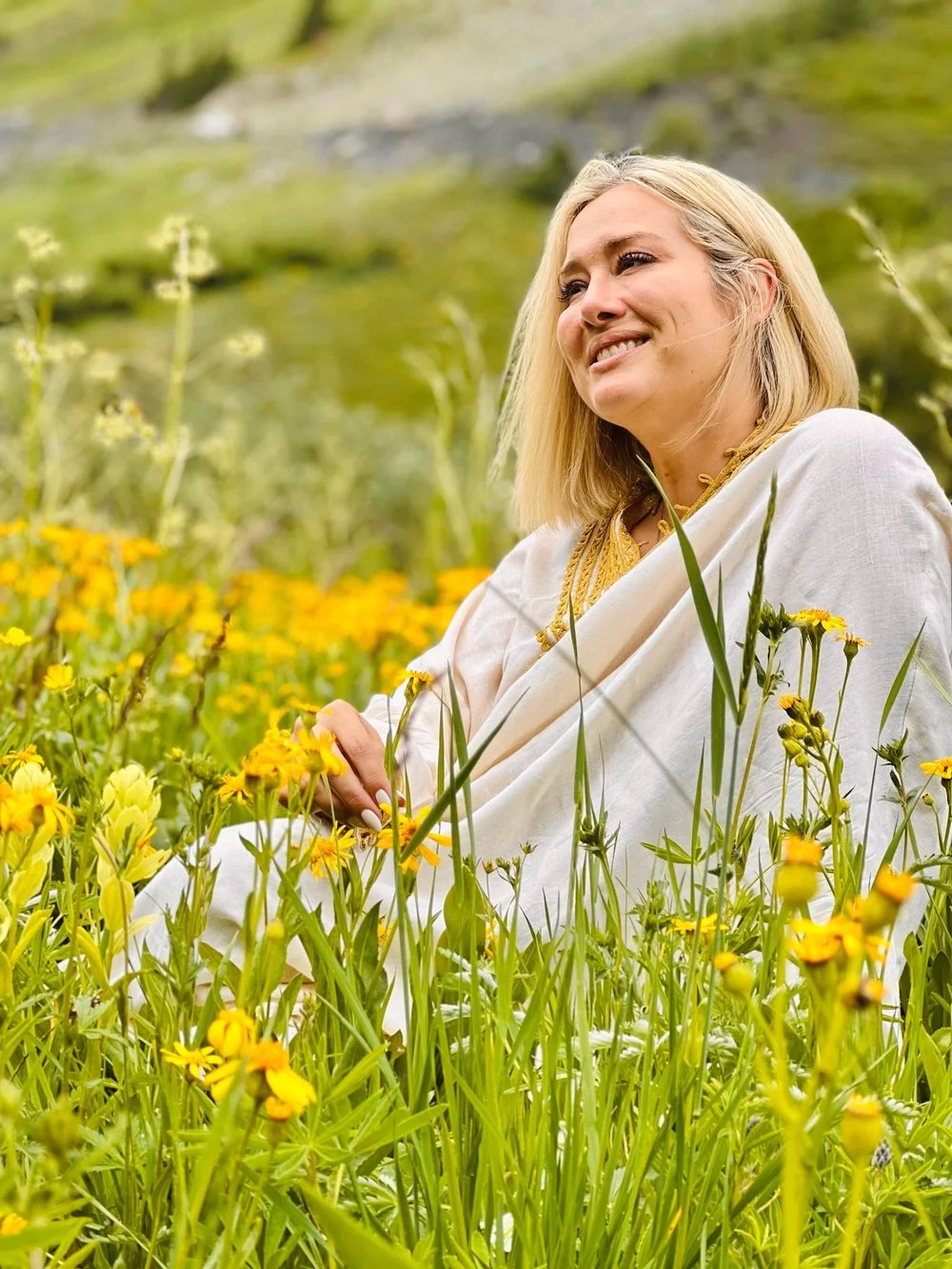
A Note from Jennifer, 2026:
Since I created my first vision board many years ago, I've seen significant changes in my clarity of purpose. I've checked off several of my short-term goals, and I'm steadily working toward the long-term ones. The boards remind me daily of what's truly important and motivate me on my journey.
But it's not just about achieving the goals on the board; more importantly, it's about who I am becoming as I grow and transform with a clearer vision. I've become more focused, resilient, and determined to live a life aligned with my deepest desires and in harmony with Creation, one step at a time.